
{
Fuentes dietéticas de omega-3: los mejores alimentos para la salud del corazón

25 de October, 2025
Los huevos convencionales contienen una cantidad moderada de omega-3, mientras que los huevos enriquecidos pueden aportar bastante más, según la alimentación de las gallinas. En este artículo encontrarás diferencias prácticas entre ambos tipos, su contenido de grasa y proteína, formas de prepararlos y respuestas sobre comer uno o dos huevos al día. También explicamos cuándo puede tener sentido considerar un suplemento de omega-3.
16 de October, 2025
Tomar omega-3 puede ser una opción útil cuando la dieta no aporta suficientes ácidos grasos, pero no es necesario para todas las personas. Esta guía explica las diferencias entre ALA, EPA y DHA, los posibles beneficios del omega-3, sus principales fuentes alimentarias, la información general sobre dosis y los efectos secundarios e interacciones que conviene considerar. También aborda su uso diario, el embarazo y la relación con los ojos secos.
{"content":"
Los ácidos grasos omega-3 son grasas esenciales que el organismo no puede producir de forma eficiente, por lo que deben obtenerse de los alimentos o de suplementos. Para los lectores que buscan fuentes dietéticas de omega 3 que apoyen la salud del corazón, el enfoque práctico está en el pescado graso, el marisco, las semillas, los frutos secos y ciertos alimentos fortificados, además de comprender qué tipos de omega-3 aportan. Este artículo explica el EPA, el DHA y el ALA, revisa la evidencia sobre los beneficios cardiovasculares, compara fuentes alimentarias, estima las necesidades diarias y aclara cuándo los suplementos pueden ser útiles o no. También aborda la absorción, la calidad del producto y la seguridad para que puedas tomar una decisión informada en lugar de adivinar a partir de las etiquetas o los síntomas.
¿Qué son los ácidos grasos omega-3 y por qué importan?
Los ácidos grasos omega-3 son una familia de grasas poliinsaturadas que desempeñan funciones estructurales y reguladoras en el organismo. Se incorporan a las membranas celulares y se utilizan para producir moléculas de señalización que influyen en la inflamación, la función de los vasos sanguíneos y el metabolismo. Dado que el ácido alfa-linolénico (ALA) es un ácido graso esencial, debe obtenerse de la dieta. El EPA y el DHA no son estrictamente esenciales de la misma manera, pero son condicionalmente importantes porque la conversión corporal a partir del ALA es limitada y variable.
Tipos de omega-3: EPA, DHA y ALA explicados
El ALA se encuentra principalmente en alimentos vegetales como las semillas de lino, las semillas de chía, las nueces y ciertos aceites vegetales. Es el ácido graso omega-3 precursor y puede convertirse en EPA y DHA, pero la conversión suele ser baja —a menudo se estima en menos del 10 % para el EPA y aún menos para el DHA— y varía entre personas. El EPA y el DHA son omega-3 de cadena larga que se encuentran predominantemente en alimentos marinos. El EPA participa en la producción de eicosanoides y en la regulación inflamatoria, mientras que el DHA se concentra especialmente en las membranas celulares del cerebro y la retina y apoya la estructura y función normales de la membrana.
La diferencia entre los omega-3 de origen vegetal y los marinos
Las fuentes marinas aportan EPA y DHA preformados, que el organismo puede utilizar directamente. Las fuentes vegetales aportan ALA, que debe convertirse en EPA y DHA, lo que las hace menos eficientes para elevar los niveles tisulares de EPA y DHA. Esto no hace que las fuentes vegetales sean poco importantes —el ALA sigue siendo esencial y contribuye a la calidad global de la grasa—, pero explica por qué las personas que evitan el pescado pueden necesitar prestar más atención al aceite de algas o a los alimentos fortificados que aportan DHA y, a veces, EPA.
Cómo apoyan los omega-3 la salud del corazón
Los omega-3 influyen en la salud cardiovascular a través de varios mecanismos plausibles, pero la evidencia no es uniforme en todos los resultados. Pueden afectar a los triglicéridos sanguíneos, la presión arterial, la función plaquetaria, la inflamación y la fluidez de las membranas. El efecto establecido más sólido es la reducción de triglicéridos, especialmente con ingestas más altas, mientras que los efectos sobre el infarto de miocardio, el ictus y la muerte cardiovascular son más modestos e inconsistentes en los ensayos clínicos.
El papel del EPA y el DHA en la función cardiovascular
El EPA y el DHA se incorporan a las membranas celulares, donde influyen en las vías de señalización y en la producción de eicosanoides. Pueden reducir la producción hepática de triglicéridos y pueden disminuir modestamente la presión arterial y los marcadores inflamatorios. El DHA contribuye a la estructura de las membranas en el tejido cardíaco y vascular, mientras que el EPA está más estrechamente relacionado con la producción de mediadores antiinflamatorios. Estos efectos son biológicamente significativos, pero no significan que los omega-3 sustituyan a la medicación para la presión arterial, al tratamiento del colesterol ni a otras atenciones médicas.
Qué dice la evidencia sobre los omega-3 y el riesgo de enfermedad cardíaca
Los estudios observacionales han relacionado generalmente una mayor ingesta de pescado y omega-3 con un menor riesgo cardiovascular, pero las asociaciones no demuestran causalidad. Los ensayos aleatorizados con suplementos de aceite de pescado han arrojado resultados mixtos: algunos sugieren reducciones modestas de eventos cardiovasculares o muerte cardíaca, mientras que otros muestran poco o ningún beneficio. Las diferencias en la dosis, el estado basal de omega-3, la dieta de fondo y el uso de medicamentos probablemente explican parte de la inconsistencia. Los productos de omega-3 con receta se utilizan para la hipertrigliceridemia grave bajo supervisión médica, pero los suplementos de venta libre no deben considerarse un sustituto de un tratamiento cardiovascular probado.
Principales fuentes dietéticas de omega-3
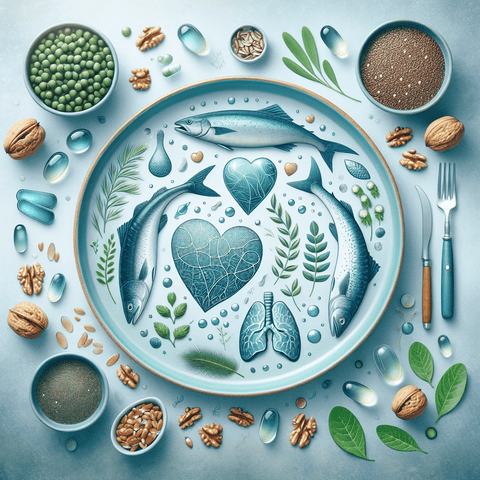
Las fuentes alimentarias difieren sustancialmente en el tipo y la cantidad de omega-3 que aportan. El pescado graso y el marisco son las fuentes más directas de EPA y DHA, mientras que los alimentos vegetales contribuyen principalmente con ALA. Los productos fortificados pueden añadir cantidades útiles, pero su contribución depende del producto y de la etiqueta.
Pescado graso y marisco ricos en EPA y DHA
El salmón, la caballa, las sardinas, el arenque, las anchoas y la trucha arcoíris se encuentran entre las fuentes más ricas de EPA y DHA. Las sardinas, el salmón y la caballa en conserva son prácticos y a menudo asequibles, mientras que el pescado fresco o congelado puede prepararse de muchas formas. Las guías dietéticas suelen sugerir dos raciones de pescado por semana, con al menos una ración de pescado graso. El marisco contiene algo de omega-3, pero generalmente menos que el pescado graso. Las personas embarazadas y quienes tengan preocupaciones sobre el mercurio deben elegir opciones con menor contenido de mercurio y seguir las recomendaciones locales de seguridad.
Fuentes vegetales de ALA
Las semillas de lino molidas, las semillas de chía, las semillas de cáñamo, las nueces, la soja, el edamame y el aceite de canola o de soja son fuentes útiles de ALA. Moler las semillas de lino mejora su accesibilidad y almacenarlas en frío ayuda a limitar la oxidación. Estos alimentos también aportan fibra, proteína y otros nutrientes, lo que los hace valiosos más allá de su contenido de ALA. Para opciones vegetales más ricas en nutrientes, consulta esta guía sobre superalimentos y sus declaraciones nutricionales.
Alimentos fortificados: ¿son una fuente fiable?
Algunos huevos, leches, yogures, zumos, untables y cereales están fortificados con DHA o EPA, a menudo procedentes de aceite de algas o de pescado. Pueden ayudar a las personas que comen poco pescado, pero las cantidades varían mucho y pueden ser modestas. Es mejor considerar los alimentos fortificados como un complemento de un patrón general, más que como una fuente principal garantizada. Consulta la etiqueta nutricional para conocer el tipo específico de omega-3 y la cantidad por ración.
¿Cuánto omega-3 necesitas al día?
Las recomendaciones varían según el país y el propósito, por lo que es útil distinguir las pautas generales de salud de las dosis terapéuticas o de investigación. Para adultos en general, muchas autoridades sugieren alrededor de 250–500 mg de EPA y DHA combinados al día, lo que a menudo se traduce en dos raciones de pescado a la semana. Las recomendaciones de ALA son independientes: la Ingesta Adecuada es de aproximadamente 1,1 g al día para mujeres adultas y 1,6 g al día para hombres adultos.
Ingesta recomendada para la salud general
Estas cifras son orientativas para la población general, no prescripciones individualizadas. Las personas con necesidades más altas, como quienes reciben indicación de un clínico por triglicéridos altos, pueden utilizar cantidades diferentes bajo supervisión. La cantidad de un suplemento no es lo mismo que el peso total de aceite de pescado en la etiqueta, así que compara el EPA y DHA combinados por ración en lugar del tamaño de la cápsula por sí solo.
Cómo estimar tu ingesta semanal a partir de los alimentos
Un enfoque sencillo consiste en contar las comidas de pescado por semana y estimar el EPA y el DHA según el tamaño de la ración y la especie. Una ración de 100 g de pescado graso puede aportar aproximadamente 1–2 g de EPA y DHA combinados según el tipo, mientras que el pescado magro y el marisco aportan menos. Añade fuentes de ALA como semillas de lino molidas, chía, nueces y alimentos de soja. Si tu dieta es mayoritariamente vegetal o rara vez comes pescado, tu ingesta de EPA y DHA puede ser baja incluso si la ingesta total de grasa es adecuada.
Señales de que podrías no estar obteniendo suficiente omega-3
Una ingesta baja de omega-3 puede ocurrir sin síntomas evidentes, y muchas de las señales propuestas son inespecíficas. A veces se mencionan la piel seca, la fatiga, las uñas quebradizas y la falta de concentración, pero pueden tener muchas causas y no diagnostican una deficiencia. Una evaluación dietética es más informativa que basarse únicamente en los síntomas.
Indicadores comunes de una ingesta baja
Las personas que rara vez comen pescado, evitan el marisco, siguen una dieta restrictiva o dependen en gran medida de alimentos ultraprocesados pueden tener una ingesta menor de EPA y DHA. Lo mismo se aplica a algunas personas mayores con apetito reducido y a quienes tienen malabsorción de grasas. Estos son patrones de riesgo dietético, no criterios diagnósticos. Si te preocupa, revisa tu ingesta habitual con un profesional cualificado en lugar de autodiagnosticarte a partir de los síntomas.
Cuándo considerar analizar tus niveles de omega-3
El índice de omega-3 mide el porcentaje de EPA y DHA en las membranas de los glóbulos rojos y puede aportar información sobre la ingesta a más largo plazo. No es una prueba rutinaria para todos, y los resultados deben interpretarse junto con la dieta, el estado de salud y el contexto clínico. Las pruebas pueden ser útiles cuando la ingesta es incierta o cuando un clínico está monitorizando una afección específica, pero no son necesarias antes de hacer mejoras dietéticas básicas.
Factores que afectan tu estado de omega-3
El estado de omega-3 refleja más que la cantidad de pescado o semillas en tu dieta. Las elecciones alimentarias, la digestión, la edad y el estilo de vida influyen en cuánto EPA y DHA llega a los tejidos. La variabilidad individual es sustancial, por lo que ingestas idénticas no siempre producen niveles sanguíneos idénticos.
Patrones dietéticos y preferencias alimentarias
Las dietas vegetarianas y veganas pueden ser ricas en ALA pero bajas en EPA y DHA preformados, a menos que se incluyan aceite de algas o alimentos fortificados. Las dietas pescetarianas pueden ser adecuadas si se come pescado graso con regularidad. Las alergias alimentarias, el rechazo al marisco, el acceso limitado a pescado fresco y la dependencia de alimentos procesados también pueden reducir la ingesta. La calidad global de la dieta importa porque los omega-3 funcionan dentro de un patrón más amplio de fibra, verduras, legumbres y alimentos mínimamente procesados.
Edad, digestión y problemas de absorción
Las personas mayores pueden comer menos pescado o tener menos apetito. Las afecciones que afectan a la digestión de las grasas —como la insuficiencia pancreática, ciertas enfermedades gastrointestinales o la cirugía bariátrica— pueden reducir la absorción de grasas dietéticas y nutrientes liposolubles. Si tienes una afección digestiva o te han operado del aparato gastrointestinal, pregunta a un clínico si tu ingesta o absorción necesita una atención especial.
Hábitos de estilo de vida que influyen en los niveles de omega-3
Fumar y consumir alcohol en exceso pueden afectar a la inflamación y a la calidad global de la dieta, aunque no son medidas directas del estado de omega-3. La actividad física y el peso corporal pueden influir en cómo se utilizan y almacenan los omega-3. La palanca de estilo de vida más práctica sigue siendo la ingesta regular de alimentos ricos en omega-3, respaldada por un patrón dietético globalmente saludable.
Formas prácticas de añadir más alimentos con omega-3 a tu dieta
Aumentar la ingesta de omega-3 no requiere cambiar por completo la dieta. Los pequeños cambios repetibles suelen ser más sostenibles que las raciones grandes ocasionales. El objetivo es un patrón que aporte tanto ALA como, cuando corresponda, EPA y DHA preformados.
Cambios sencillos para una mayor ingesta de omega-3
- Sustituye una comida de ave o carne cada semana por salmón, caballa, sardinas o trucha.
- Utiliza sardinas o salmón en conserva sobre tostadas o en la pasta en lugar de un relleno con menos omega-3.
- Añade semillas de lino molidas o semillas de chía al yogur, a la avena o a los batidos.
- Toma nueces como tentempié en lugar de galletas saladas refinadas o patatas fritas.
- Elige huevos o lácteos fortificados cuando encajen en tu dieta y presupuesto.
- Utiliza aceite de canola o de soja con moderación para la cocina diaria cuando sea adecuado.
Consejos de cocción y almacenamiento para preservar los omega-3
Las grasas omega-3 pueden oxidarse cuando se exponen al calor, la luz y el oxígeno. Hornear, cocer al vapor, escalfar y freír suavemente en sartén son generalmente preferibles a las frituras profundas repetidas o a la cocción prolongada a alta temperatura. Guarda los aceites en lugares oscuros y frescos y mantén el pescado debidamente refrigerado o congelado. Las semillas de lino molidas y las semillas de cáñamo es mejor conservarlas en frío y utilizarlas dentro de su vida útil recomendada.
Comer bien con una dieta vegetal o pescetariana
Quienes siguen una dieta vegetal pueden combinar alimentos ricos en ALA con aceite de algas o alimentos fortificados con DHA para obtener omega-3 preformados. Las personas pescetarianas pueden priorizar el pescado graso dos veces por semana y elegir opciones con menor mercurio si es necesario. Si evitas todos los productos de origen animal, el aceite de algas es la fuente de origen vegetal más directa de DHA y, a veces, de EPA, lo que lo convierte en una opción práctica para comentar con un dietista o un clínico.
Suplementos de omega-3: ¿cuándo son una opción razonable?
Los suplementos no son automáticamente necesarios para la salud del corazón, y los alimentos deben seguir siendo la base siempre que sea posible. Pueden ser razonables cuando la ingesta dietética es persistentemente baja, cuando la absorción está reducida o cuando un clínico recomienda una dosis específica para una afección médica. No sustituyen a una dieta variada ni a un tratamiento cardiovascular prescrito.
Situaciones en las que solo los alimentos pueden no ser suficientes
Las personas que rara vez comen pescado o marisco, las personas veganas que no utilizan aceite de algas, las personas mayores con poco apetito y quienes tienen malabsorción de grasas pueden tener dificultades para cubrir las necesidades de EPA y DHA solo con alimentos. El embarazo y la lactancia son otras situaciones en las que la ingesta de DHA merece atención, pero las opciones de suplementos deben comentarse con un profesional sanitario. El omega-3 en dosis altas para triglicéridos muy elevados debe manejarse médicamente.
La diferencia entre aceite de pescado, aceite de krill y aceite de algas
El aceite de pescado es la fuente de suplemento más común y aporta EPA y DHA en concentraciones variables. El aceite de krill aporta omega-3 en forma de fosfolípidos junto con astaxantina, pero normalmente contiene menos EPA y DHA por cápsula, y la evidencia de que sea sistemáticamente superior es mixta. El aceite de algas es adecuado para dietas veganas y aporta DHA y, a veces, EPA. Compara el EPA y DHA combinados por ración, el coste y la idoneidad dietética en lugar de asumir que un aceite es universalmente mejor. Puedes explorar opciones de suplementos de omega-3 con DHA y EPA para ver cómo difieren las etiquetas.
Cómo elegir un suplemento de omega-3 de calidad
La calidad importa porque los suplementos de omega-3 varían en concentración, frescura y pureza. Una cápsula grande no significa necesariamente una dosis grande de EPA y DHA. Leer el panel de información nutricional del suplemento y buscar análisis independientes es más útil que las afirmaciones de marketing.
Entender el contenido de EPA y DHA por ración
Comprueba el EPA y DHA combinados indicados por ración, no solo el peso total de aceite de pescado o de krill. Un producto puede contener 1.000 mg de aceite de pescado pero solo 300 mg de EPA y DHA. Fíjate también en el tamaño de la ración: dos perlas blandas pueden ser una ración. Si comparas productos, calcula el coste por 100 mg de EPA y DHA para tener una imagen más clara.
Formas de omega-3: triglicéridos frente a ésteres etílicos
Los suplementos de omega-3 se venden comúnmente como triglicéridos naturales o ésteres etílicos concentrados. Las formas de triglicéridos se parecen más a cómo se presentan los omega-3 en los alimentos, mientras que los ésteres etílicos se utilizan para concentrar el EPA y el DHA. Las diferencias de absorción son generalmente modestas y pueden depender de si el suplemento se toma con una comida que contenga grasa. La evidencia no respalda firmemente declarar una forma universalmente superior, por lo que la dosis, la tolerabilidad y la calidad deben guiar la elección.
Pureza, frescura y análisis de terceros
Busca productos que declaren análisis de terceros para metales pesados, PCB y oxidación. La frescura importa porque los aceites oxidados pueden oler rancio y ser menos agradables. Comprueba las fechas de caducidad, las instrucciones de almacenamiento y cualquier certificación. Un producto que ofrece análisis claros por lote y un etiquetado transparente suele ser más fácil de evaluar que uno que solo se basa en las afirmaciones del frontal de la etiqueta.
Comparación de cápsulas, perlas blandas y fórmulas líquidas
Las perlas blandas son cómodas y protegen los aceites de la luz y el oxígeno, pero algunas son grandes. Las cápsulas pueden ser más fáciles de tragar, pero a menudo contienen dosis más pequeñas. Las fórmulas líquidas permiten una dosificación flexible y son útiles para quienes no les gustan las pastillas, pero requieren una refrigeración y medición cuidadosas. Elige el formato que realmente vayas a utilizar de forma constante y que se ajuste a la dosis que necesitas.
Seguridad de los suplementos de omega-3 e interacciones potenciales
Los suplementos de omega-3 suelen tolerarse bien con las ingestas habituales, pero las dosis más altas merecen precaución. No existe un límite superior de ingesta clásico para el EPA y el DHA como ocurre con algunas vitaminas, pero las guías regulatorias y clínicas a menudo consideran que las ingestas de hasta aproximadamente 3 g al día de EPA y DHA combinados son generalmente seguras para la mayoría de los adultos. Las cantidades más altas deben comentarse con un clínico.
Límites superiores recomendados y efectos secundarios
Los efectos secundarios comunes incluyen sabor a pescado persistente, eructos, heces blandas y molestias gastrointestinales leves. Las dosis altas pueden aumentar el tiempo de sangrado, aunque el sangrado clínicamente importante es poco frecuente en personas que no toman anticoagulantes. Tomar los suplementos con alimentos puede mejorar la tolerabilidad y la absorción. No asumas que más omega-3 siempre es mejor; las dosis muy altas no son necesarias de forma rutinaria para el bienestar general.
Quién debe consultar a un médico antes de suplementar
Consulta a un profesional sanitario antes de usar suplementos de omega-3 si tomas anticoagulantes o antiagregantes plaquetarios, tienes una cirugía programada, estás embarazada o en periodo de lactancia, tienes alergia al pescado o padeces una afección médica que afecte a la absorción de grasas o a la función hepática. Las personas con dispositivos cardíacos implantados o con productos de omega-3 recetados deben seguir el consejo médico en lugar de automedicarse.
Conclusión final: cubrir tus necesidades de omega-3 mediante alimentos y suplementos
Para la mayoría de las personas, cubrir las necesidades de omega-3 es principalmente una cuestión de patrón alimentario. El pescado graso habitual, las fuentes vegetales de ALA y —cuando es útil— los alimentos fortificados o el aceite de algas pueden proporcionar una base práctica. La evidencia respalda los omega-3 como parte de una dieta saludable para el corazón, pero no justifica tratar los suplementos como una cura ni como un sustituto de la atención médica. Las necesidades individuales varían según la dieta, la edad, la digestión, el embarazo, el uso de medicamentos y el estado de salud. Los suplementos pueden ser un puente razonable cuando la ingesta o la absorción son inadecuadas, pero deben seleccionarse con cuidado y utilizarse con orientación profesional cuando existan factores de riesgo.
Puntos clave
- Los omega-3 incluyen ALA, EPA y DHA; el ALA es esencial y se convierte en EPA y DHA de forma ineficiente.
- El pescado graso y el marisco aportan EPA y DHA preformados, mientras que los alimentos vegetales aportan principalmente ALA.
- Las guías generales suelen sugerir alrededor de 250–500 mg de EPA y DHA combinados al día, o dos raciones de pescado a la semana.
- La Ingesta Adecuada de ALA es de aproximadamente 1,1 g/día para mujeres y 1,6 g/día para hombres.
- Los síntomas no son fiables para diagnosticar un estado bajo de omega-3; la revisión dietética y, a veces, las pruebas son más informativas.
- Los suplementos pueden ayudar cuando la ingesta de pescado es baja, la absorción está reducida o un clínico los recomienda.
- Compara los suplementos por EPA y DHA por ración, forma, frescura, pureza y análisis de terceros.
- Las dosis altas y el uso con anticoagulantes requieren consejo médico.
Preguntas frecuentes
¿Cuáles son las mejores fuentes dietéticas de omega-3?
Las fuentes directas más ricas de EPA y DHA son el pescado graso, como el salmón, la caballa, las sardinas, el arenque, las anchoas y la trucha. Alimentos vegetales como las semillas de lino molidas, las semillas de chía, las nueces y la soja aportan ALA. Los huevos fortificados, los lácteos y el aceite de algas pueden añadir DHA y, a veces, EPA.
¿Cuánto omega-3 debo tomar al día?
Muchas autoridades sugieren alrededor de 250–500 mg de EPA y DHA combinados al día para la salud general de los adultos, una cantidad que a menudo se alcanza con dos raciones de pescado a la semana. La orientación sobre el ALA es independiente: alrededor de 1,1 g/día para mujeres y 1,6 g/día para hombres. Las necesidades individuales pueden variar, especialmente en presencia de afecciones médicas.
¿Puedo cubrir las necesidades de omega-3 sin comer pescado?
Sí, pero requiere planificación porque los alimentos vegetales aportan ALA en lugar de EPA y DHA preformados. El aceite de algas, los alimentos fortificados con DHA y las fuentes regulares de ALA pueden apoyar la ingesta. La conversión a partir del ALA es limitada, por lo que depender solo de las semillas puede no elevar los niveles de EPA y DHA de forma eficiente.
¿Es el pescado en conserva una buena fuente de omega-3?
Las sardinas, el salmón, la caballa y el atún en conserva pueden ser fuentes útiles, y las sardinas suelen ser especialmente prácticas y asequibles. Comprueba el sodio y los ingredientes añadidos, y elige pescado con menor contenido de mercurio si estás embarazada o tienes preocupaciones específicas. El pescado en conserva puede contar para las raciones semanales de pescado.
¿La cocción destruye los omega-3?
El calor alto, las frituras prolongadas y el recalentamiento repetido pueden favorecer la oxidación de las grasas omega-3. Hornear, cocer al vapor, escalfar y freír suavemente en sartén son generalmente mejores opciones. Un almacenamiento adecuado y evitar cocinar en exceso también ayudan a preservar la calidad.
¿Cuál es la diferencia entre ALA y EPA/DHA?
El ALA es un omega-3 esencial de origen vegetal que el organismo debe convertir en EPA y DHA, y esa conversión es limitada. El EPA y el DHA son omega-3 de cadena larga que se encuentran principalmente en alimentos marinos y el organismo los utiliza de forma más directa. Ambos importan, pero no son intercambiables en cuanto a efecto.
¿Son los alimentos fortificados una fuente fiable de omega-3?
Los alimentos fortificados pueden contribuir con cantidades significativas, pero los niveles varían mucho según el producto. Son útiles para las personas que evitan el pescado, pero no debe asumirse que aportan una dosis diaria completa. Consulta la etiqueta para conocer el tipo y la cantidad de omega-3 por ración.
¿Cómo puedo saber si tengo un nivel bajo de omega-3?
No existen signos fiables basados en síntomas de un estado bajo de omega-3, y la piel seca o la fatiga pueden tener muchas causas. Una revisión dietética es un primer paso práctico. El análisis de sangre del índice de omega-3 puede aportar información adicional cuando sea clínicamente adecuado.
¿Debo tomar aceite de pescado si como pescado dos veces por semana?
Si comes pescado graso con regularidad dos veces por semana, es posible que ya cumplas las recomendaciones generales de EPA y DHA. Un suplemento no es automáticamente necesario. Ten en cuenta tu ingesta global, cualquier consejo médico y si un clínico ha recomendado una dosis específica.
¿Es el aceite de krill mejor que el aceite de pescado?
El aceite de krill no es universalmente superior. Aporta omega-3 en forma de fosfolípidos y contiene astaxantina, pero a menudo ofrece menos EPA y DHA por cápsula. El aceite de pescado suele estar más concentrado y ser menos costoso. Compara el EPA y DHA combinados, el coste, la tolerabilidad y la evidencia en lugar de las afirmaciones de marketing.
¿Puede ser perjudicial demasiado omega-3?
Las dosis altas pueden causar molestias gastrointestinales y pueden aumentar el riesgo de sangrado, especialmente con medicación anticoagulante. Las ingestas de hasta aproximadamente 3 g/día de EPA y DHA combinados se consideran generalmente seguras para la mayoría de los adultos, mientras que las dosis más altas deben supervisarse médicamente. Más no es necesariamente mejor.
¿Interactúa el omega-3 con los anticoagulantes?
Los omega-3 pueden afectar a la función plaquetaria y pueden aumentar el riesgo de sangrado cuando se usan con anticoagulantes o fármacos antiagregantes plaquetarios. Si tomas warfarina, apixabán, rivaroxabán, clopidogrel, aspirina o medicamentos similares, consulta a tu prescriptor antes de suplementar. Los omega-3 procedentes de alimentos forman parte generalmente de una dieta normal, pero los suplementos en dosis altas merecen una revisión.
Palabras clave relacionadas
- fuentes dietéticas de omega 3
- mejores alimentos con omega 3
- fuentes alimentarias de EPA y DHA
- fuentes vegetales de omega 3
- omega 3 para la salud del corazón
- alimentos con ALA
- omega 3 del pescado graso
- ingesta diaria de omega 3
- suplementos de omega 3
- omega 3 de aceite de algas
- aceite de krill frente a aceite de pescado
- signos de deficiencia de omega 3
- alimentos fortificados con omega 3
- análisis del índice de omega 3
"}