
{ "top_level_keys": [ "id", "object", "created_at", "updated_at", "review", "status", "user", "eligibility", "media", "meta", "experiences" ], "top_level_keys_extra": [], "top_level_values": [ "practical-simple-ways-improve-your-wellness", "page", "2025-03-24T15:38:24.000Z", "2025-03-24T15:38:24.000Z", { "good": [ "Practical tips that are easy to follow daily", "Covers various wellness aspects in a structured way", "Clear explanations without medical jargon" ], "bad": [ "Some advice is overly generic", "Could benefit from more specific scientific references" ], "suggestions": [ "Include citations for health claims", "Add more personalized wellness strategies" ] }, "published", {}, { "is_elegible_for_google_reviews": false, "is_elegible_for_trustindex": false }, { "type": "image", "url": "https://mcdn.topvitamine.com/fit-in/1200x/emails/wellness-tips-image.png", "alt": "Wellness tips flat lay with supplements and notebook", "width": 1200, "height": 800 }, { "title": "Practical & Simple Ways to Improve Your Wellness", "description": "Discover practical simple ways to improve your wellness with daily habits, nutrition, and mindful routines.", "image": "https://mcdn.topvitamine.com/fit-in/1200x/emails/wellness-tips-image.png", "keywords": "wellness, simple wellness tips, daily wellness habits, improve wellness naturally" }, [] ] }
Suplementos de omega-3 de origen vegetal: DHA de algas para la salud del corazón y el cerebro
{"content":"
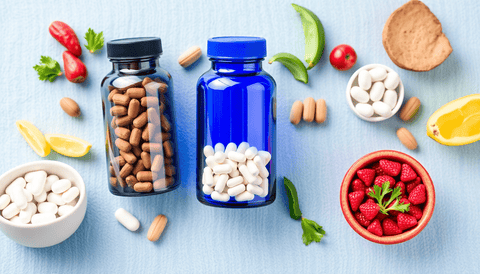
Los suplementos veganos de omega-3 de origen vegetal ofrecen una forma de obtener los ácidos grasos omega-3 de cadena larga DHA y EPA sin pescado ni aceite de pescado, normalmente mediante aceites derivados de microalgas. Esto es importante porque la mayoría de los alimentos vegetales solo aportan ALA, un omega-3 de cadena corta que el cuerpo convierte en DHA y EPA de manera ineficiente. En este artículo, aprenderá cómo se comparan los omega-3 de origen algáceo con el aceite de pescado, qué dice la evidencia sobre su papel en la salud del corazón, el cerebro y los ojos, cuánto puede necesitar y cómo evaluar la calidad del producto, para que pueda tomar una decisión informada que se adapte a su dieta y estilo de vida.
\n\n
¿Qué son los suplementos de omega-3 de origen vegetal y por qué son importantes?
\n\n
Los ácidos grasos omega-3 son una familia de grasas poliinsaturadas implicadas en la estructura de las membranas celulares, la señalización inflamatoria y el funcionamiento del corazón, el cerebro y los ojos. Los tres omega-3 más relevantes desde el punto de vista nutricional son el ALA (ácido alfa-linolénico), el EPA (ácido eicosapentaenoico) y el DHA (ácido docosahexaenoico). Mientras que el ALA se encuentra ampliamente en los alimentos vegetales, el DHA y el EPA se concentran en el pescado y el marisco, salvo que provengan de las algas, la fuente original de la que los peces los obtienen en primer lugar.
\n\n
Los suplementos de omega-3 de origen vegetal utilizan aceite extraído de microalgas, aportando DHA y EPA directamente en una forma adecuada para veganos, vegetarianos y cualquier persona que evite el pescado. Dado que los patrones alimentarios hacen cada vez más hincapié en los alimentos vegetales, saber cómo asegurar una ingesta adecuada de omega-3 de cadena larga se ha convertido en un tema nutricional importante y no en una preocupación marginal.
\n\n
EPA y DHA frente a ALA: entender los tres principales omega-3
\n\n
El ALA es un ácido graso esencial, lo que significa que el cuerpo no puede producirlo y debe obtenerlo de los alimentos. Sirve en parte como precursor del EPA y el DHA. Sin embargo, esta conversión es notablemente limitada: la investigación sugiere que solo una pequeña fracción del ALA, a menudo estimada en menos del 10 %, se convierte en EPA, y aún menos llega a convertirse en DHA, con estimaciones de conversión a DHA que frecuentemente quedan por debajo del 1–5 %. La conversión también varía según la genética, el sexo y la ingesta total de grasas en la dieta.
\n\n
El EPA participa principalmente en la producción de eicosanoides, moléculas de señalización que influyen en los procesos inflamatorios y cardiovasculares. El DHA es un componente estructural importante de las membranas celulares, especialmente en el cerebro y la retina. Dado que el EPA y el DHA desempeñan funciones que el ALA no puede reemplazar por completo, depender únicamente de la ingesta de ALA puede traducirse en un estado más bajo de omega-3 de cadena larga con el tiempo.
\n\n
Por qué las personas que siguen una dieta vegetal pueden tener dificultades para obtener suficiente DHA y EPA
\n\n
Las personas que siguen dietas veganas o vegetarianas suelen cubrir fácilmente la ingesta de ALA mediante linaza, semillas de chía, nueces y aceites vegetales, pero los estudios muestran de forma consistente que los veganos tienden a presentar niveles sanguíneos más bajos de DHA y EPA en comparación con los omnívoros. La conversión de ALA en DHA parece insuficiente para compensar por completo, especialmente a largo plazo.
\n\n
Esto no significa automáticamente que las personas que siguen una dieta vegetal desarrollen problemas de salud: los síntomas de deficiencia son raros y el cuerpo reduce la degradación del DHA para conservar sus reservas. Aun así, las personas que desean mantener un estado de omega-3 de cadena larga comparable al de quienes comen pescado a menudo encuentran que el aceite de algas es la opción más directa, ya que evita por completo la conversión.
\n\n
Aceite de algas frente a aceite de pescado como fuente de omega-3
\n\n
El aceite de pescado ha sido durante mucho tiempo la fuente predeterminada de EPA y DHA suplementarios, pero no es la fuente original. Los peces acumulan omega-3 consumiendo algas y plancton, de modo que el aceite de algas aporta los mismos ácidos grasos un paso antes en la cadena alimentaria. Para quienes comparan opciones, nuestra colección de omega-3 DHA y EPA muestra la gama de formulaciones de omega-3 de origen algáceo y otras disponibles.
\n\n
Cómo se produce el omega-3 de origen algáceo
\n\n
El aceite de algas comercial se produce cultivando especies de microalgas, normalmente Schizochytrium o Nannochloropsis, en grandes tanques de fermentación. Las algas se cultivan en condiciones controladas, se cosechan y se procesan para extraer su aceite, que luego se estandariza a concentraciones específicas de DHA y EPA. Dado que el cultivo tiene lugar lejos del océano, el producto no acumula contaminantes marinos como puede ocurrir con algunos aceites de pescado, y no requiere pesca, lo que también lo hace más sostenible.
\n\n
Contenido de DHA y EPA en el aceite de algas frente al de pescado
\n\n
Históricamente, el aceite de algas contenía principalmente DHA con poco EPA, pero cepas más nuevas y métodos de procesamiento más recientes producen aceites ricos en EPA o con proporciones equilibradas de EPA y DHA comparables a las del aceite de pescado. Las concentraciones varían mucho entre productos, por lo que la comparación significativa es la de miligramos de DHA y EPA por porción, no la de aceite total. En cuanto a la absorción, los estudios sugieren que el DHA de origen algáceo tiene una biodisponibilidad comparable a la del DHA del aceite de pescado cuando se igualan la dosis y la forma.
\n\n
Beneficios para la salud del DHA y el EPA de las algas
\n\n
Vale la pena señclarlo con claridad desde el principio: la suplementación con omega-3 no es un tratamiento para ninguna enfermedad, y la evidencia más sólida de beneficio proviene de poblaciones y rangos de dosis específicos. Dicho esto, el DHA y el EPA tienen funciones nutricionales establecidas que justifican asegurar una ingesta adecuada.
\n\n
Cómo contribuyen los omega-3 a la salud del corazón
\n\n
El EPA y el DHA contribuyen al funcionamiento normal del corazón; esta es una de las pocas declaraciones de salud sobre omega-3 permitidas por la normativa europea a ingestas de unos 250 mg diarios de EPA y DHA. La evidencia es más sólida para el mantenimiento de niveles normales de triglicéridos en sangre a ingestas más altas (unos 2 g diarios) y para el apoyo de una presión arterial normal a unos 3 g diarios. Los resultados de grandes ensayos clínicos sobre suplementos de omega-3 y eventos cardiovasculares en la población general han sido contradictorios, por lo que los suplementos deben considerarse un apoyo nutricional y no una protección cardiovascular.
\n\n
El papel del DHA en la función cerebral y cognitiva
\n\n
El DHA es el omega-3 más abundante en el cerebro, concentrado en las membranas neuronales y las estructuras sinápticas. Se considera que un estado adecuado de DHA es importante a lo largo de toda la vida, y se acumula rápidamente en el cerebro fetal e infantil durante el embarazo y el desarrollo temprano. En adultos, la investigación observacional ha asociado un estado más alto de omega-3 con mejores resultados cognitivos, aunque los ensayos de intervención han arrojado resultados contradictorios, especialmente en personas sin ingesta basal baja.
\n\n
Beneficios adicionales para la salud ocular y el embarazo
\n\n
El DHA es un componente estructural de la retina, y la ingesta materna de DHA contribuye al desarrollo normal del cerebro y los ojos del feto y de los lactantes amamantados, una declaración de salud regulada que se aplica a una ingesta materna de 200 mg diarios de DHA además de la recomendación general para adultos. Como estas declaraciones se refieren a la contribución nutricional al desarrollo normal, no deben confundirse con efectos de tratamiento para enfermedades oculares o deterioro cognitivo.
\n\n
Evaluación de su estado personal de omega-3
\n\n
¿Cuánto omega-3 necesita realmente?
\n\n
No existe un objetivo universal único, y las recomendaciones difieren entre países y autoridades. Las orientaciones generales suelen centrarse en 250–500 mg diarios de EPA y DHA combinados para adultos sanos, mientras que etapas vitales específicas, como el embarazo, conllevan consideraciones adicionales. El ALA tiene su propia recomendación de ingesta adecuada, normalmente en torno a 1–2 g diarios según la ingesta energética. Las dosis de los suplementos deben leerse en la etiqueta como EPA y DHA por porción, no como aceite total.
\n\n
Factores que pueden aumentar sus necesidades de omega-3
\n\n
Las necesidades y el estado individual pueden variar en función de:
\n
- Patrón alimentario: un consumo escaso o nulo de pescado graso reduce la ingesta directa de EPA y DHA
- Genética: las variantes de las enzimas del metabolismo de los ácidos grasos afectan a la eficiencia de conversión del ALA
- Embarazo y lactancia: la demanda de DHA aumenta para favorecer el desarrollo fetal e infantil
- Edad: la eficiencia de conversión y el estado de DHA pueden disminuir con la edad
- Ingesta total de grasas: una ingesta alta de grasas omega-6 puede competir con la conversión del ALA
- Estado de salud: ciertas afecciones que afectan a la absorción de grasas pueden influir en el estado de omega-3
\n\n
Medición de sus niveles de omega-3
\n\n
Los síntomas por sí solos no pueden establecer el estado de omega-3, y no existe un síndrome de deficiencia claramente definido de DHA y EPA en adultos. Los análisis de sangre como el índice de omega-3, el porcentaje de EPA y DHA en las membranas de los glóbulos rojos, pueden proporcionar información objetiva si desea conocer su estado en lugar de adivinarlo. Este tipo de evaluación es opcional, pero puede ser útil para quienes quieren ajustar su ingesta o verificar que un suplemento está funcionando.
\n\n
Fuentes alimentarias vegetales de DHA y EPA
\n\n
Los mejores productos alimentarios de origen algáceo y alimentos enriquecidos
\n\n
Las fuentes vegetales directas de DHA y EPA preformados se limitan casi por completo a las algas. Las opciones incluyen el aceite de algas como aceite culinario o suplemento líquido, y productos enriquecidos como algunas bebidas vegetales, yogures y fórmulas infantiles que contienen DHA añadido. Los alimentos enriquecidos suelen contener cantidades modestas, por lo que es esencial comprobar la etiqueta para ver los miligramos de DHA por porción.
\n\n
¿Puede el ALA de la linaza, la chía y las nueces cubrir sus necesidades?
\n\n
El ALA procedente de la linaza, las semillas de chía, el cáñamo y las nueces contribuye a la ingesta total de omega-3 y sigue siendo nutricionalmente valioso. Sin embargo, como la conversión en DHA es limitada y variable, es poco probable que el ALA por sí solo mantenga un estado de omega-3 de cadena larga en los niveles típicos de quienes comen pescado. Muchas personas que siguen una dieta vegetal consideran los alimentos ricos en ALA como una base y utilizan el aceite de algas para cerrar la brecha de DHA y EPA.
\n\n
Cuándo tiene sentido la suplementación para quienes siguen una dieta vegetal
\n\n
Consideraciones para veganos y vegetarianos
\n\n
Para veganos y vegetarianos, la suplementación con aceite de algas depende de la situación y no es una necesidad universal. Quienes no comen pescado y consumen pocos alimentos de origen algáceo pueden considerar razonablemente un suplemento de DHA y EPA para mantener el estado de omega-3 de cadena larga. Las personas que incluyen regularmente alimentos derivados de algas pueden ya cubrir una parte de sus necesidades. Como orientación general sobre la planificación nutricional en dietas vegetales más amplia, nuestra guía de multivitaminas explica cómo encajan varios nutrientes en las dietas veganas.
\n\n
Necesidades durante el embarazo y la lactancia
\n\n
Los requisitos de DHA aumentan durante el embarazo y la lactancia, porque el DHA se acumula en el cerebro fetal y se transfiere al bebé a través de la leche materna. Las futuras madres vegetarianas y veganas disponen de pocas vías alimentarias para obtener DHA preformado, por lo que el DHA de origen algáceo es una opción comúnmente recomendada a considerar durante este periodo. Cualquier elección de suplemento durante el embarazo o la lactancia debe comentarse con una matrona, un médico o un dietista titulado.
\n\n
Afecciones que pueden justificar una ingesta más alta
\n\n
Las personas con afecciones que afectan a la absorción de grasas, triglicéridos elevados o circunstancias médicas específicas pueden recibir del profesional sanitario la recomendación de aumentar la ingesta de EPA y DHA, a veces con dosis muy por encima de las recomendaciones nutricionales generales. En estos casos, los suplementos se utilizan bajo supervisión profesional como parte de un plan de cuidado más amplio, no como tratamiento por cuenta propia. Las dosis más altas también se aplican a ciertos productos de omega-3 con receta, que difieren de los suplementos generales.
\n\n
Cómo elegir un suplemento de omega-3 de algas de alta calidad
\n\n
Mire la etiqueta: cantidad de DHA y EPA por porción
\n\n
La cifra más importante de la etiqueta es el contenido combinado de EPA y DHA por porción, no la cantidad total de aceite. Algunos productos indican 500 mg de aceite de algas pero solo aportan 200 mg de DHA. Ajuste el contenido de EPA y DHA por porción a la ingesta prevista en lugar de contar cápsulas. Observe también si el DHA y el EPA se indican por separado, ya que los productos difieren en sus proporciones.
\n\n
Forma de triglicéridos frente a forma de ésteres etílicos: ¿cuál es la diferencia?
\n\n
Los omega-3 se suministran en diferentes formas químicas: triglicéridos reesterificados, ésteres etílicos o, a veces, fosfolípidos. Los omega-3 en forma de triglicéridos se asemejan más a la estructura natural de las grasas de los alimentos, y algunas investigaciones sugieren una absorción ligeramente mejor, especialmente cuando se toman sin comida. Los ésteres etílicos pueden absorberse igual de bien si se toman con una comida que contenga grasa. La evidencia no es lo bastante concluyente para declarar una forma universalmente superior, pero la forma y el momento de la toma conjuntamente influyen en cuánto absorbe realmente.
\n\n
Certificaciones e indicadores de calidad: vegano, sin OMG y pruebas de terceros
\n\n
Los indicadores de calidad útiles incluyen:
\n
- Certificación vegana de un organismo reconocido, que confirme la ausencia de auxiliares de procesamiento de origen animal
- Pruebas de terceros para verificar la pureza y el contenido por un laboratorio independiente
- Control de la oxidación: los aceites de omega-3 tienden a enranciarse, por lo que importan las medidas de frescura y los valores bajos de peróxido
- Verificación sin OMG, relevante porque muchas cepas de algas se cultivan en procesos de fermentación
- Etiquetado transparente de la especie de alga y del contenido exacto de DHA y EPA
\n\n
Cápsulas frente a líquido: ¿qué forma de administración elegir?
\n\n
Las cápsulas y los softgels son cómodos, protegen el aceite de la oxidación y enmascaran el sabor marino que presentan algunos aceites de algas. Los líquidos permiten una dosificación flexible y suelen costar menos por miligramo de DHA, pero requieren refrigeración después de abrir y tienen una vida útil más corta. Elija según sus necesidades de dosificación, sus preferencias de sabor y si va a usar el producto de forma constante; la constancia importa más que la forma de administración.
\n\n
Cómo leer correctamente la etiqueta de un suplemento de omega-3 de algas
\n\n
Entender los nombres de los ingredientes y sus formas naturales
\n\n
Las listas de ingredientes pueden nombrar el aceite como \"aceite de algas\", \"aceite de Schizochytrium sp.\" o \"aceite rico en DHA de microalgas\". El detalle clave es la declaración del contenido estandarizado, que suele encontrarse en el panel de información del suplemento y muestra el DHA y el EPA por cápsula o por cucharadita. Algunos productos añaden extracto de romero, tocoferoles (vitamina E) o palmitato de ascorbilo como antioxidantes para proteger el aceite: son ingredientes funcionales, no meramente decorativos.
\n\n
Detectar excipientes, aditivos y alérgenos innecesarios
\n\n
La cubierta de la cápsula puede contener gelatina o una alternativa vegetal como carragenina o almidón modificado, algo importante que los veganos deben verificar. Compruebe las declaraciones de alérgenos, como los excipientes a base de soja o girasol, y tenga precaución con los productos que enumeran largas cadenas de ingredientes con edulcorantes, aromas o colorantes que aportan poco valor funcional. Las formulaciones más sencillas suelen ser, aunque no siempre, señal de un producto más enfocado.
\n\n
Seguridad, efectos secundarios e interacciones de los omega-3 de algas
\n\n
Límites superiores recomendados y riesgos de una ingesta excesiva
\n\n
Los suplementos de omega-3 se toleran generalmente bien a las dosis recomendadas. Las autoridades europeas de seguridad alimentaria han indicado que ingestas suplementarias de hasta unos 5 g diarios de EPA y DHA es poco probable que planteen preocupaciones de seguridad para la mayoría de los adultos. Ingestas más altas pueden aumentar ligeramente el tiempo de sangrado y pueden causar síntomas digestivos leves como eructos, heces blandas o náuseas. El uso prolongado a dosis altas no debe emprenderse a la ligera, y lo que cuenta es la ingesta total de omega-3 procedente de los alimentos y los suplementos combinados.
\n\n
Interacciones farmacológicas potenciales y consideraciones antes de una cirugía
\n\n
Los suplementos de omega-3 pueden tener efectos aditivos con anticoagulantes o antiagregantes plaquetarios como la warfarina, y las personas que los usen, o que se acerquen a una cirugía, suelen recibir la recomendación de informar a su profesional sanitario sobre todos los suplementos que toman. Los omega-3 también pueden ser relevantes para quienes toman medicamentos para la presión arterial, dado el efecto modesto de reducción de la presión arterial a dosis más altas. Como con cualquier suplemento, las mujeres embarazadas, las personas con condiciones médicas existentes y quienes toman medicación con receta deben consultar a un profesional antes de empezar.
\n\n
Tomar una decisión informada: ¿alimentos, estilo de vida o suplementación?
\n\n
Un marco práctico de decisión: si come pescado graso con regularidad, la suplementación puede aportar poco. Si sigue una dieta vegetal y los alimentos ricos en ALA constituyen su base, un suplemento de DHA y EPA de origen algáceo es una opción razonable y basada en la evidencia para mantener el estado de omega-3 de cadena larga. Si no está seguro de su estado, pruebas como el índice de omega-3 pueden sustituir las conjeturas. Y si tiene triglicéridos elevados, toma anticoagulantes o está embarazada, la orientación profesional debe preceder a la decisión del suplemento. Así es como deben usarse mejor los productos de la categoría de omega-3: como apoyo nutricional dentro de una dieta bien construida, no como sustituto de ella.
\n\n
Consejos clave para veganos, vegetarianos y flexitarianos
\n\n
Cuándo consultar a un profesional sanitario sobre los omega-3
\n\n
Consulte a un profesional sanitario si está embarazada o en periodo de lactancia y considera suplementos de omega-3, si toma medicación anticoagulante o tiene programada una cirugía, si padece una afección médica que afecte a la absorción de grasas, o si está considerando dosis superiores a las recomendaciones nutricionales generales. Un dietista titulado también puede ayudar a integrar los omega-3 de origen algáceo en un plan de nutrición vegetal completo junto con otros nutrientes que merecen atención, como la vitamina B, la vitamina D y el yodo.
\n\n
Conclusiones clave
\n\n
- Los suplementos de omega-3 de origen vegetal utilizan aceite de algas para aportar directamente DHA y EPA, los mismos omega-3 de cadena larga presentes en el pescado.
- El ALA de la linaza, la chía y las nueces es esencial, pero se convierte en DHA de forma ineficiente, a menudo por debajo del 5 %, por lo que es poco probable que cubra por completo las necesidades de omega-3 de cadena larga.
- El aceite de algas iguala al aceite de pescado en biodisponibilidad y, en las formulaciones modernas, en contenido de EPA y DHA, al tiempo que evita los contaminantes marinos y la presión pesquera.
- El DHA contribuye al funcionamiento normal del cerebro y la visión, y el EPA y el DHA juntos apoyan el funcionamiento normal del corazón a unos 250 mg diarios.
- Las mujeres embarazadas y lactantes tienen mayores necesidades de DHA, y el DHA de origen algáceo es una opción comúnmente considerada para quienes evitan el pescado.
- Evalúe los suplementos por su contenido de EPA y DHA por porción, no por el aceite total, y compruebe la forma química, la protección antioxidante y la certificación vegana.
- Tome los omega-3 con una comida que contenga grasa para una mejor absorción, en particular las formas de ésteres etílicos.
- Las ingestas suplementarias de hasta unos 5 g diarios de EPA y DHA se consideran poco probables de plantear preocupaciones de seguridad para la mayoría de los adultos, aunque se recomienda consejo médico con medicación anticoagulante o antes de una cirugía.
- Las pruebas, como el índice de omega-3, ofrecen información objetiva cuando desea ir más allá de las conjeturas sobre su estado.
\n\n
Preguntas frecuentes
\n\n
¿De qué están hechos los suplementos de omega-3 de origen vegetal?
\n
Están hechos de microalgas, más comúnmente especies de Schizochytrium, cultivadas en tanques de fermentación controlados. Las algas producen naturalmente DHA y EPA, que se extraen y se estandarizan en aceite. Los peces obtienen sus omega-3 de las algas en primer lugar, por lo que el aceite de algas es, en realidad, la fuente original.
\n\n
¿Es el aceite de algas tan bueno como el aceite de pescado?
\n
Para aportar DHA y EPA, sí: los estudios sugieren una biodisponibilidad comparable cuando se igualan la dosis y la forma química. Los aceites de algas modernos también ofrecen un contenido significativo de EPA, no solo de DHA. Las principales diferencias radican en el coste por miligramo y en las preferencias personales o medioambientales.
\n\n
¿Pueden la linaza y las semillas de chía reemplazar los omega-3 del pescado o de las algas?
\n
Aportan ALA, que es esencial, pero el cuerpo solo convierte una pequeña fracción del ALA en DHA y EPA, a menudo menos del 5 % en el caso del DHA. Los alimentos ricos en ALA son una base valiosa, pero es poco probable que mantengan por sí solos el estado de omega-3 de cadena larga.
\n\n
¿Cuánto omega-3 de algas debo tomar al día?
\n
La orientación general para adultos sanos suele centrarse en 250–500 mg diarios de EPA y DHA combinados, con cantidades mayores consideradas en situaciones específicas como el embarazo. Compruebe el contenido por porción en la etiqueta en lugar de la cantidad total de aceite, y comente dosis más altas con un profesional sanitario.
\n\n
¿Cuándo debo tomar un suplemento de omega-3 de algas?
\n
Tómelo con una comida que contenga algo de grasa para favorecer la absorción, en particular si el producto está en forma de ésteres etílicos. La constancia de la ingesta diaria importa más que la hora concreta del día.
\n\n
¿Es seguro el DHA de algas durante el embarazo?
\n
El DHA contribuye al desarrollo normal del cerebro y los ojos del feto, y la normativa respalda 200 mg adicionales de DHA diarios durante el embarazo. El DHA de origen algáceo evita el pescado, lo que también reduce la exposición a contaminantes marinos. Confirme cualquier elección de suplemento con su matrona o médico.
\n\n
¿Se puede tomar demasiado omega-3 de algas?
\n
Ingestas de hasta unos 5 g diarios de EPA y DHA combinados se consideran poco probables de plantear preocupaciones de seguridad para la mayoría de los adultos. Ingestas más altas pueden aumentar el tiempo de sangrado y causar efectos secundarios digestivos, por lo que dosis muy altas no deben tomarse sin orientación profesional.
\n\n
¿Los omega-3 de algas interactúan con los medicamentos?
\n
Pueden tener efectos aditivos con los anticoagulantes y antiagregantes plaquetarios, y pueden afectar modestamente la presión arterial a dosis más altas. Si toma medicación con receta o se prepara para una cirugía, informe a su profesional sanitario sobre su uso de suplementos.
\n\n
¿Cuánto tarda en notarse el efecto de los suplementos de omega-3?
\n
Los niveles sanguíneos de omega-3 responden en semanas o meses de ingesta constante, pero no debe esperar \"sentir\" un efecto. La suficiencia nutricional consiste en apoyar el funcionamiento fisiológico normal a lo largo del tiempo, no en producir cambios perceptibles a corto plazo.
\n\n
¿Las cápsulas de omega-3 de algas siempre son veganas?
\n
No necesariamente: el aceite puede ser vegano, pero la cubierta de la cápsula puede contener gelatina. Busque una etiqueta con certificación vegana o compruebe si la cubierta utiliza materiales vegetales como carragenina o almidón modificado.
\n\n
¿Qué es el índice de omega-3?
\n
Es un análisis de sangre que mide el porcentaje de EPA y DHA en las membranas de los glóbulos rojos. Ofrece una imagen objetiva del estado de omega-3 de cadena larga de los últimos meses, lo cual es más fiable que inferir el estado a partir de los síntomas.
\n\n
¿Necesito un suplemento de omega-3 si como pescado de vez en cuando?
\n
Depende de la frecuencia, el tipo y las cantidades. El consumo regular de pescado graso suele aportar cantidades significativas de EPA y DHA, mientras que el consumo ocasional puede no cubrir del todo la ingesta. En caso de duda, las pruebas o una conversación con un dietista pueden aclarar si la suplementación aporta valor.
\n\n
Palabras clave relacionadas
\n
- suplementos veganos de omega-3
- aceite de algas DHA y EPA
- suplemento de omega-3 vegano
- fuente vegetal de DHA
- conversión de ALA frente a DHA y EPA
- omega-3 de algas frente a aceite de pescado
- omega-3 para veganos
- DHA durante el embarazo en dietas vegetales
- prueba del índice de omega-3
- omega-3 en forma de triglicéridos
- fuentes vegetales de DHA y EPA
- omega-3 para la salud del corazón
- DHA para la función cerebral
- fuentes sostenibles de omega-3
"}