
{"" : "", "" : ""}
Vitaminas de origen vegetal: aumenta tu energía, inmunidad y bienestar de forma natural

20 de May, 2026
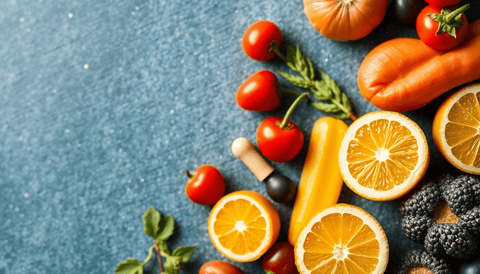
Obtener multivitaminas de forma natural es posible combinando cada día verduras de colores, frutas, legumbres, cereales integrales, frutos secos, huevos y pescado azul. Esta guía reúne los alimentos ricos en vitaminas y minerales, las combinaciones que mejoran la absorción de nutrientes, el papel del microbioma intestinal y las situaciones en las que valorar un suplemento multivitamínico, siempre con orientación profesional.
13 de September, 2025
Los suplementos naturales no son automáticamente mejores ni más seguros que los sintéticos. En esta guía comparamos el origen, la composición, la biodisponibilidad y los aspectos de seguridad de ambos tipos de vitaminas. También explicamos qué significa realmente «natural», cómo revisar una etiqueta, cuándo puede ser útil un suplemento y por qué la elección debe depender de las necesidades individuales y del asesoramiento profesional cuando sea necesario.
22 de July, 2025
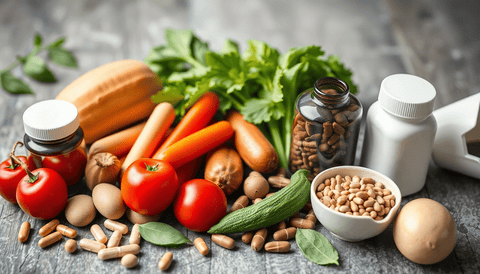
Los suplementos veganos pueden complementar una alimentación basada en plantas cuando existe una necesidad concreta. Esta guía explica el papel de la vitamina B12, el omega-3 de algas, el hierro, la vitamina D y los probióticos, además de las diferencias entre un producto vegano y uno cruelty-free. También ofrece criterios para comparar ingredientes, formatos, etiquetado, certificaciones y precauciones antes de elegir.

06 de July, 2025
El mejor multivitamínico vegano depende de tu alimentación, tus necesidades y la fórmula del producto, no solo de que indique ser orgánico o natural. Esta guía explica qué revisar en la vitamina B12, la vitamina D, el hierro, el calcio, el yodo y el zinc; cuándo considerar omega-3 o probióticos por separado; y cómo interpretar las certificaciones. También responde preguntas sobre opciones vegetales, productos ecológicos y piel madura.
{"content":"
Las vitaminas de origen vegetal son nutrientes procedentes de alimentos vegetales, o suplementos elaborados con ingredientes de origen vegetal o a base de alimentos integrales, en lugar de compuestos puramente sintéticos. Su interés ha crecido a medida que más personas adoptan dietas veganas, vegetarianas o simplemente más basadas en plantas, y quieren saber si las fuentes vegetales pueden cubrir de forma realista sus necesidades de energía, inmunidad y bienestar general. En este artículo, explicamos qué significa realmente «de origen vegetal» en el contexto de las vitaminas, cómo se absorben los nutrientes de origen vegetal, qué nutrientes son más importantes para la energía y la función inmunitaria, dónde suelen aparecer las carencias dietéticas más frecuentes y cómo elegir un suplemento de origen vegetal de alta calidad si tu dieta por sí sola no cubre por completo tus necesidades.
\n\n
¿Qué son las vitaminas de origen vegetal y en qué se diferencian de las sintéticas?
\n\n
Cómo se define «de origen vegetal» en vitaminas y suplementos
\n
El término «de origen vegetal» se utiliza con cierta ligereza en la industria de los suplementos, por lo que conviene distinguir varios significados. En el sentido más estricto, las vitaminas de origen vegetal provienen directamente de alimentos vegetales: vitamina C de acerola o camu camu, por ejemplo, o beta-caroteno (un precursor de la vitamina A) de zanahorias o algas. En un sentido más amplio, el término también describe suplementos que simplemente no contienen ingredientes de origen animal, como las cápsulas de gelatina, incluso cuando los nutrientes en sí se producen de forma sintética o por fermentación.
\n
Cabe señalar que una molécula de vitamina químicamente idéntica se comporta de la misma manera en el organismo independientemente de su procedencia. La vitamina C sintetizada en un laboratorio es indistinguible a nivel molecular de la vitamina C de una naranja. Las diferencias más relevantes están en lo que acompaña al nutriente (fibra, fitonutrientes y minerales que coexisten con él) y en la dosis y la forma, más que en el «origen» del nutriente por sí solo.
\n\n
Diferencias clave entre nutrientes de alimentos integrales, de origen vegetal y sintéticos
\n
Las fuentes de alimentos integrales aportan nutrientes dentro de una matriz alimentaria compleja: una naranja proporciona vitamina C junto con flavonoides, fibra, potasio y agua. Los suplementos de origen vegetal concentran nutrientes extraídos de los alimentos y, a veces, conservan algunos de estos compuestos acompañantes. Los nutrientes sintéticos o aislados proporcionan una forma química concreta, como el ácido ascórbico o la cianocobalamina, en una dosis precisa y estandarizada.
\n
Cada enfoque tiene sus compensaciones. Los productos a base de alimentos integrales ofrecen un complejo de nutrientes, pero normalmente en dosis más bajas y menos estandarizadas por toma. Los nutrientes aislados permiten una dosificación exacta, lo que importa cuando se corrige una carencia documentada, como la vitamina B12 en las dietas veganas. Para la mayoría de las personas sanas que siguen una dieta variada, la diferencia práctica es modesta; para quienes abordan una carencia concreta, la precisión de la dosis suele importar más que el origen.
\n\n
Por qué importa el origen: cómo se absorben y utiliza el cuerpo los nutrientes de origen vegetal
\n\n
El papel de la biodisponibilidad en las vitaminas de origen vegetal
\n
La biodisponibilidad describe la proporción de un nutriente ingerido que realmente se absorbe y queda disponible para su uso por el organismo. Varía según el nutriente, la forma química, la matriz alimentaria y factores individuales como la salud intestinal, la edad y el uso de medicamentos. Algunos nutrientes de origen vegetal se absorben con eficiencia, mientras que otros requieren pasos de conversión que no todo el mundo realiza con igual eficacia.
\n
Un ejemplo clásico es la vitamina A: las plantas aportan carotenoides como el beta-caroteno, que el organismo debe convertir en vitamina A activa. Esta conversión es genéticamente variable y puede reducirse en aproximadamente un tercio o más bajo condiciones dietéticas habituales. Del mismo modo, el hierro de origen vegetal (no hemo) se absorbe, en general, con menos eficiencia que el hierro hemo presente en los alimentos de origen animal. Ninguno de estos problemas hace que las fuentes vegetales sean inadecuadas, pero sí significa que las cantidades y las combinaciones importan.
\n\n
Cofactores y fitonutrientes en las fuentes de alimentos integrales
\n
Los alimentos vegetales integrales suelen contener compuestos que mejoran la utilización de los nutrientes. La vitamina C mejora significativamente la absorción del hierro no hemo, y por eso combinar lentejas ricas en hierro con pimientos o cítricos es un consejo práctico y no un eslogan de bienestar. Las vitaminas liposolubles A, D, E y K se absorben mejor cuando se consumen con grasa dietética, de modo que añadir aceite de oliva o aguacate a una ensalada tiene una función práctica real.
\n
Las plantas también aportan fitonutrientes —flavonoides, carotenoides y polifenoles— que no se clasifican como vitaminas esenciales, pero que contribuyen al carácter nutricional global de un patrón alimentario basado en plantas. Algunos, sin embargo, pueden actuar en sentido contrario: los fitatos de los cereales integrales y las legumbres pueden fijar minerales como el hierro y el zinc, reduciendo su absorción. Remojar, fermentar y germinar reduce este efecto.
\n\n
Vitaminas de origen vegetal para la energía: ¿qué nutrientes favorecen el metabolismo celular?
\n\n
El papel de las vitaminas del grupo B en la producción natural de energía
\n
Varias vitaminas del grupo B actúan como cofactores en las vías metabólicas que convierten carbohidratos, grasas y proteínas en energía celular utilizable (ATP). La vitamina B12, el folato, la vitamina B6, la tiamina (B1), la riboflavina (B2), la niacina (B3) y el ácido pantoténico (B5) participan cada una en pasos diferentes. Cuando la ingesta de alguna de ellas es insuficiente, puede aparecer fatiga y sensación de falta de energía, aunque la fatiga tiene muchas causas posibles y por sí sola no indica una deficiencia de vitaminas del grupo B.
\n
Para quienes siguen dietas omnívoras variadas, la ingesta de vitaminas del grupo B suele ser adecuada. Quienes siguen dietas estrictamente basadas en plantas deben prestar especial atención a la vitamina B12, que no está presente de forma fiable en los alimentos vegetales no fortificados. Para conocer mejor cada vitamina del grupo B, consulta nuestra guía sobre fuentes y seguridad de las vitaminas del grupo B.
\n\n
El hierro y su forma de origen vegetal: hierro hemo frente a hierro no hemo
\n
El hierro es un mineral y no una vitamina, pero es esencial para la energía porque permite que la hemoglobina transporte oxígeno. El hierro dietético existe en dos formas: hierro hemo procedente de los alimentos de origen animal, que se absorbe con relativa eficiencia, y hierro no hemo de fuentes vegetales como las lentejas, el tofu, las semillas de calabaza y los cereales fortificados, que se absorbe con menor facilidad y es más sensible a inhibidores como los fitatos y a potenciadores como la vitamina C.
\n
Las personas que siguen dietas de origen vegetal pueden mantener un estado de hierro adecuado, pero los requerimientos de hierro —en particular en mujeres en edad premenopáusica— son lo suficientemente elevados como para justificar atención a la ingesta y a las combinaciones alimentarias. Si la fatiga persiste, conviene comprobar el estado del hierro mediante un análisis de sangre en lugar de darlo por supuesto, ya que la suplementación con hierro en ausencia de deficiencia conlleva sus propios riesgos.
\n\n
Vitaminas de origen vegetal para la inmunidad: nutrientes clave que favorecen la función inmunitaria
\n\n
Vitamina C de alimentos integrales: más allá del ácido ascórbico
\n
La vitamina C favorece la función inmunitaria normal y contribuye a la defensa antioxidante. Los cítricos, el kiwi, las fresas, los pimientos y el brócoli son todas excelentes fuentes, y una dieta de origen vegetal bien planificada suele cubrir o superar sin esfuerzo la ingesta recomendada de vitamina C. Las fuentes de alimentos integrales aportan vitamina C junto con flavonoides y otros compuestos, aunque la evidencia de que esta combinación haga la vitamina significativamente más eficaz que el ácido ascórbico aislado sigue siendo limitada.
\n
Como la vitamina C es hidrosoluble y no se almacena en gran medida, una ingesta diaria regular importa más que dosis grandes ocasionales. En nuestra guía de vitamina C encontrarás más detalles sobre fuentes alimentarias y ingesta habitual.
\n\n
El papel de la vitamina D y el zinc en la salud inmunitaria (y sus fuentes de origen vegetal)
\n
La vitamina D contribuye a la función inmunitaria normal y un estado bajo es habitual en regiones con poca exposición solar, especialmente en invierno. Pocos alimentos vegetales no fortificados aportan cantidades significativas de vitamina D; la principal fuente de origen vegetal son las setas expuestas a radiación UV (vitamina D2) y los suplementos de vitamina D2 o D3 de origen algal. La exposición a la luz solar, los alimentos fortificados y la suplementación son las vías habituales; consulta nuestro artículo sobre vitamina D para conocer los detalles.
\n
El zinc favorece la función de las células inmunitarias y se encuentra en semillas de calabaza, legumbres, cereales integrales y frutos secos. Al igual que ocurre con el hierro, los fitatos reducen la absorción del zinc de origen vegetal, por lo que las personas veganas pueden beneficiarse de orientarse hacia la parte alta de los rangos de ingesta recomendados, idealmente con orientación profesional y no por estimación.
\n\n
Cómo obtener los nutrientes que necesitas con una dieta de origen vegetal
\n\n
Fuentes de alimentos integrales de vitaminas y minerales esenciales
\n
Una dieta de origen vegetal bien construida puede aportar la mayoría de las vitaminas y los minerales esenciales. Los pilares más fiables incluyen:
\n
- Verduras de hoja verde (col rizada, espinacas, acelgas): folato, vitamina K, magnesio, carotenoides
- Legumbres (lentejas, garbanzos, alubias): hierro, zinc, folato, proteínas, fibra
- Frutos secos y semillas (almendras, semillas de girasol, semillas de calabaza): vitamina E, magnesio, zinc, grasas saludables
- Cereales integrales (avena, quinoa, arroz integral): vitaminas del grupo B, magnesio, selenio
- Alimentos fortificados (bebidas vegetales, cereales de desayuno, levadura nutricional): vitamina B12, vitamina D, calcio, riboflavina
- Verduras y frutas de colores variados: vitamina C, carotenoides, potasio y una amplia gama de fitonutrientes
\n
Nuestras guías sobre magnesio y superalimentos ricos en nutrientes ofrecen más detalles sobre estrategias basadas primero en los alimentos.
\n\n
Carencias nutricionales habituales en los patrones dietéticos veganos y vegetarianos
\n
La investigación sobre dietas veganas y vegetarianas identifica de forma consistente un puñado de nutrientes que requieren atención activa: vitamina B12, vitamina D, hierro (especialmente en mujeres), zinc, yodo, calcio y los ácidos grasos omega-3 EPA y DHA. Ninguno de ellos hace inviable la alimentación de origen vegetal, pero varios son difíciles de obtener de forma fiable solo a partir de alimentos vegetales no fortificados, y las carencias tienden a desarrollarse lentamente, a veces a lo largo de años.
\n
Los alimentos fortificados pueden cubrir parte de la necesidad. La levadura nutricional y las bebidas vegetales fortificadas aportan B12; la sal yodada y las algas aportan yodo (estas últimas de forma impredecible y, a veces, en exceso); el aceite de algas aporta EPA y DHA directamente. Planificar con antelación importa más que preocuparse después.
\n\n
Cuándo un suplemento de origen vegetal puede ser un complemento razonable en tu rutina
\n\n
Abordar carencias concretas: B12, vitamina D, hierro y omega-3
\n
La suplementación se vuelve verdaderamente relevante cuando la ingesta dietética no puede cubrir de forma fiable un nutriente, algo especialmente claro con la vitamina B12 en una dieta totalmente de origen vegetal. La mayoría de las organizaciones de salud veganas recomiendan B12 procedente regularmente de alimentos fortificados o suplementos, porque depender de fuentes vegetales poco fiables conlleva un riesgo real de deficiencia con posibles consecuencias neurológicas duraderas si no se atiende.
\n
La suplementación con vitamina D se considera habitualmente en regiones con poca exposición solar, independientemente de la dieta. Los suplementos de omega-3 de origen algal (DHA/EPA) son una alternativa directa y apta para dietas vegetales frente al aceite de pescado. La suplementación con hierro debería seguir, en general, una confirmación mediante análisis de sangre de un estado bajo, ya que el exceso de hierro no es inocuo. Para obtener un contexto más amplio sobre decisiones específicas de nutrientes, nuestra guía de multivitamínicos explica cómo los productos combinados abordan varias carencias a la vez.
\n\n
Factores del estilo de vida y mayores necesidades nutricionales que pueden justificar la suplementación
\n
Más allá del patrón dietético, las circunstancias individuales modifican los requerimientos. El embarazo y la lactancia aumentan las necesidades de folato, hierro, yodo y B12. Las menstruaciones con sangrado intenso incrementan las pérdidas de hierro. La ingesta calórica restringida, la edad avanzada (que reduce la absorción de B12 y la síntesis cutánea de vitamina D), determinados medicamentos (incluida la metformina y los inhibidores de la bomba de protones, que afectan al estado de B12) y las enfermedades gastrointestinales que dificultan la absorción aumentan la probabilidad de que la dieta por sí sola resulte insuficiente. En estas situaciones, conviene considerar un suplemento específico o un plan guiado por un profesional.
\n\n
Señales de que tu dieta puede carecer de nutrientes clave
\n\n
Cómo reconocer posibles carencias de energía e inmunidad
\n
La fatiga persistente, las infecciones frecuentes o de resolución lenta, la caída del cabello, las uñas quebradizas, la palidez cutánea, la falta de concentración o una tolerancia al ejercicio inusualmente baja pueden asociarse a una ingesta insuficiente de hierro, B12, vitamina D o zinc. Sin embargo, estos síntomas son inespecíficos: las mismas molestias pueden deberse a falta de sueño, estrés, disfunción tiroidea o causas médicas totalmente no relacionadas. Por tanto, los síntomas pueden señalar una cuestión que merece la pena investigar, pero no pueden confirmar por sí solos una deficiencia.
\n\n
La importancia del análisis de sangre antes de autodiagnosticarse una deficiencia
\n
El análisis de sangre ofrece información mucho más fiable que las estimaciones basadas en síntomas. La ferritina (reservas de hierro), la B12 sérica y la 25-hidroxivitamina D son medidas estándar y validadas que un médico puede interpretar en su contexto. Esto también tiene una implicación práctica: suplementar hierro o vitamina D cuando el estado ya es adecuado no aporta ningún beneficio demostrado y añade un riesgo evitable. Si sospechas de una carencia, una prueba sencilla suele ser un mejor punto de partida que el carrito de compra.
\n\n
Cómo elegir un suplemento de vitamina de origen vegetal de alta calidad
\n\n
Entender las etiquetas de los suplementos: formas activas, dosis y porcentajes de ingesta diaria
\n
Las etiquetas revelan más que la publicidad. Comprueba la forma real del nutriente (por ejemplo, metilcobalamina frente a cianocobalamina para la B12, o colecalciferol frente a ergocalciferol para la vitamina D), la dosis por toma y el porcentaje de la ingesta diaria. Un producto que aporta el 5.000 % de la ingesta diaria no es «más fuerte» en un sentido beneficioso: indica una dosis alta que puede ser innecesaria o inadecuada para un uso diario.
\n\n
Comparar formas de los ingredientes: polvos de alimentos integrales frente a nutrientes aislados
\n
Los suplementos a base de alimentos integrales enumeran alimentos y extractos y, normalmente, aportan cantidades de nutrientes menores y menos estandarizadas; los suplementos de nutrientes aislados enumeran compuestos químicos concretos en dosis precisas. Ninguno de los dos es mejor de forma categórica. Si mantienes una ingesta general, un producto a base de alimentos puede convenirte. Si abordas una carencia documentada —el ejemplo más claro es la B12 en una dieta vegana—, un nutriente aislado a una dosis respaldada por la evidencia suele ser la opción más fiable. Algunos productos combinan ambos enfoques.
\n\n
Formas de presentación: cápsulas, comprimidos, polvos y líquidos
\n
La forma de presentación afecta a la comodidad, la tolerabilidad y, en el caso de algunos nutrientes, a la absorción. Las cápsulas se utilizan ampliamente y son fáciles de tragar; ten en cuenta que las cápsulas estándar de gelatina son de origen animal, así que quienes siguen una dieta vegana deben buscar cápsulas de base celulósica. Los polvos resultan cómodos para quienes no les gusta tragar pastillas y permiten una dosificación flexible, aunque su sabor puede ser complicado. Los líquidos pueden resultar más fáciles para quienes tienen dificultades para tragar. Las vitaminas liposolubles (A, D, E, K) se toman mejor con una comida que contenga grasas; las vitaminas del grupo B y la vitamina C pueden tomarse a cualquier hora, aunque algunas personas las toman al inicio del día.
\n\n
Indicadores de calidad importantes: análisis por terceros, certificaciones e información sobre alérgenos
\n
Los indicadores de calidad que merece la pena priorizar incluyen la verificación o certificación por terceros, el etiquetado transparente de las formas y cantidades de nutrientes, la certificación vegana o vegetariana cuando resulte pertinente y declaraciones claras de alérgenos (gluten, soja, frutos secos). Los fabricantes de confianza revelan los estándares de origen y fabricación. Si la etiqueta de un producto es vaga sobre lo que contiene realmente o sobre la cantidad, esa misma vaguedad ya es reveladora.
\n\n
¿Hay riesgos o interacciones que considerar con los suplementos de origen vegetal?
\n\n
Entender los límites máximos de ingesta de las vitaminas liposolubles
\n
«Natural» no significa que la dosis carezca de consecuencias. Las vitaminas A, D, E y K son liposolubles y pueden acumularse en el organismo con el tiempo. Una ingesta crónica por encima de los niveles máximos establecidos, particularmente para las vitaminas A y D, puede causar daños, incluidos efectos hepáticos y óseos. Las vitaminas hidrosolubles se excretan en general cuando se toman en exceso, aunque dosis muy elevadas de B6 se han asociado con problemas nerviosos. Más no es mejor: ajustar la ingesta a la necesidad real es el principio más seguro. Para ampliar información, consulta nuestra guía de vitamina A y nuestro artículo sobre vitamina E.
\n\n
Interacciones con medicamentos y condiciones de salud preexistentes
\n
Hay varias interacciones relevantes que conviene conocer. La vitamina K puede reducir la eficacia de anticoagulantes como la warfarina, por lo que una ingesta constante importa más que evitarla. La vitamina C, el hierro y el zinc en dosis altas pueden interactuar con determinados medicamentos o afectar a su absorpción. Las personas con enfermedad renal deben extremar la precaución con la vitamina D y los suplementos minerales, y cualquier persona que tome medicamentos con receta o gestione una enfermedad crónica debe comentar la suplementación primero con un profesional sanitario. Los ingredientes botánicos de las mezclas «naturales» también pueden interactuar con fármacos, de modo que una etiqueta de origen vegetal no implica automáticamente ausencia de riesgos.
\n\n
Tomar la decisión correcta: ¿dieta, estilo de vida o suplemento?
\n\n
Un marco práctico para decidir según tus objetivos de bienestar
\n
Una secuencia sencilla ayuda a la mayoría de las personas a decidir dónde enfocar el esfuerzo:
\n
- Paso 1 — Optimiza primero la dieta: Valora si tu patrón diario incluye de forma fiable los grupos de alimentos mencionados. La mayor parte de las necesidades de vitamina C, folato y vitamina E pueden cubrirse solo con alimentos.
- Paso 2 — Atiende las carencias de origen vegetal conocidas: B12 (imprescindible en dietas veganas), vitamina D (según el clima) y, posiblemente, EPA/DHA de algas.
- Paso 3 — Analiza donde los resultados son inciertos: El hierro, el estado de vitamina D y la B12 son medibles; un análisis es mejor que una suposición, especialmente antes de una suplementación a dosis altas.
- Paso 4 — Suplementa de forma selectiva: Elige productos específicos con etiquetas transparentes y dosis razonables en lugar de acumular varios productos de dosis altas.
\n\n
Cuándo consultar a un profesional sanitario o a un dietista-nutricionista colegiado
\n
La intervención profesional está claramente justificada durante el embarazo y la lactancia, en niños y adolescentes, cuando se gestiona una enfermedad crónica o se toma medicación habitual, ante síntomas persistentes a pesar de una dieta que parece adecuada y antes de una suplementación prolongada a dosis altas. Un dietista-nutricionista colegiado también puede revisar tu ingesta real de alimentos e identificar carencias que los consejos genéricos pasarían por alto.
\n\n
Conclusión sobre las vitaminas de origen vegetal y el bienestar cotidiano
\n
Las vitaminas de origen vegetal son una vía legítima y bien respaldada para cubrir las necesidades nutricionales, principalmente a través de una dieta variada y bien planificada, rica en verduras, legumbres, cereales integrales, frutos secos, semillas y alimentos fortificados. Las diferencias entre los nutrientes de origen vegetal y los sintéticos son menores de lo que la publicidad suele sugerir; la dosis, la forma y tu estado individual importan más que el origen del nutriente. Algunos nutrientes, especialmente la vitamina B12, la vitamina D, el hierro y los omega-3, merecen una atención deliberada en las dietas de origen vegetal, y una suplementación específica y con dosis sensatas es una herramienta razonable cuando los alimentos no pueden aportarlos de forma fiable. Para la mayoría de las demás necesidades, una buena alimentación, un sueño adecuado y actividad física regular siguen siendo la base que ningún suplemento sustituye.
\n\n
Preguntas frecuentes
\n\n
¿Qué es exactamente una vitamina de origen vegetal?
\n
Una vitamina de origen vegetal es un nutriente procedente de fuentes vegetales, como la vitamina C de la acerola o el beta-caroteno de las zanahorias, o, en un sentido más amplio, un suplemento formulado sin ingredientes de origen animal. Químicamente, una molécula de vitamina determinada funciona de manera idéntica proceda de una planta o de un laboratorio, por lo que la etiqueta describe principalmente el origen y la filosofía de formulación.
\n\n
¿Se absorben mejor las vitaminas de origen vegetal que las sintéticas?
\n
No necesariamente. La absorción depende principalmente de la forma química del nutriente, la dosis, los componentes alimentarios que lo acompañan y tus propios factores digestivos, no de si el nutriente procede de una planta. Algunas fuentes vegetales tienen de hecho una biodisponibilidad menor, como el hierro no hemo, mientras que otras se absorben con eficiencia.
\n\n
¿Qué vitaminas son más difíciles de obtener con una dieta vegana?
\n
La vitamina B12 es el desafío más evidente, ya que los alimentos vegetales no fortificados no aportan cantidades fiables. La vitamina D, el yodo, el zinc, el hierro y los omega-3 EPA y DHA también requieren atención mediante alimentos fortificados, aceite de algas o suplementación específica.
\n\n
¿Necesito un suplemento de B12 si soy vegetariano pero como huechos y lácteos?
\n
Los vegetarianos lacto-ovovegetarianos obtienen algo de B12 de los lácteos y los huevos, pero la ingesta puede quedar por debajo de los niveles recomendados según la cantidad de estos alimentos que consumas habitualmente. Un análisis de sangre periódico de B12 es una forma sensata de comprobarlo en lugar de dar por bueno tu estado.
\n\n
¿Es la vitamina C de alimentos integrales más eficaz que el ácido ascórbico corriente?
\n
Las fuentes de alimentos integrales aportan vitamina C junto con flavonoides y fibra, lo que contribuye a la calidad general de la dieta. Sin embargo, la molécula de vitamina C es idéntica y la evidencia actual no demuestra que la vitamina C de alimentos integrales sea significativamente más eficaz en el organismo que el ácido ascórbico a dosis equivalentes.
\n\n
¿Puedo obtener suficiente vitamina D de las setas?
\n
Las setas expuestas a radiación UV aportan vitamina D2, que eleva los niveles de vitamina D en sangre, aunque la D2 parece algo menos eficaz para mantener el estado que la D3. Las setas corrientes de tienda que no han recibido tratamiento UV contienen poca vitamina D, por lo que la luz solar, los alimentos fortificados o los suplementos siguen siendo la base.
\n\n
¿Qué es el aceite de algas y es un buen sustituto del aceite de pescado para los omega-3?
\n
El aceite de algas se obtiene de microalgas y aporta EPA y DHA preformados, los mismos ácidos grasos omega-3 que se encuentran en el pescado, el cual los obtiene de las algas en origen. Es una alternativa directa muy adecuada para quienes evitan el pescado, y la investigación clínica respalda su capacidad para elevar los niveles de omega-3 en sangre.
\n\n
¿Cuánto se tarda en corregir una deficiencia de vitamina D o de hierro?
\n
Con la suplementación adecuada, el estado de vitamina D suele mejorar en un plazo de varias semanas a unos pocos meses, mientras que las reservas de hierro pueden tardar entre tres y seis meses o más en reponerse, según el défrito y su causa. Un análisis de sangre de seguimiento es la forma fiable de confirmar el progreso.
\n\n
¿Son seguros los suplementos de origen vegetal durante el embarazo?
\n
Algunos lo son, pero el embarazo modifica considerablemente los requerimientos y exige precaución. Las dosis altas de vitamina A son, en particular, una preocupación durante el embarazo. Las mujeres embarazadas deben comentar cualquier suplemento, incluidos los productos de origen vegetal y «naturales», con su matrona, médico o dietista-nutricionista colegiado antes de tomarlos.
\n\n
¿Puedo tomar demasiadas vitaminas de origen vegetal?
\n
Sí. Las vitaminas liposolubles (A, D, E, K) se acumulan en el organismo y una ingesta crónica excesiva puede causar daños; incluso algunos nutrientes hidrosolubles como la B6 se han asociado con efectos adversos a dosis crónicas elevadas. Tomar simultáneamente varios productos de dosis altas es la forma más común de que esto ocurra sin darse cuenta.
\n\n
¿Interaccionan los suplementos de origen vegetal con los medicamentos?
\n
Algunos pueden hacerlo. La vitamina K afecta a la warfarina y anticoagulantes similares; la vitamina C o los suplementos minerales a dosis altas pueden interferir en la absorción de determinados fármacos; y los ingredientes botánicos de las mezclas multicomponente pueden interactuar con una variedad de medicamentos. Consulta siempre con un farmacéutico o un médico si tomas medicamentos con receta de forma habitual.
\n\n
¿Basta con un multivitamínico para cubrir las carencias de una dieta de origen vegetal?
\n
Un multivitamínico bien formulado puede cubrir B12, vitamina D y varios otros nutrientes a dosis de mantenimiento, pero a menudo resulta insuficiente en nutrientes con necesidades individuales más altas, como el hierro, los omega-3 o el calcio. Es una base razonable para algunas personas, no un sustituto completo de productos específicos cuando existe una carencia concreta.
\n\n
Palabras clave relacionadas
\n
- vitaminas de origen vegetal
- suplementos vitamínicos veganos
- vitaminas de alimentos integrales frente a vitaminas sintéticas
- vitamina B12 de origen vegetal
- fuentes veganas de vitamina D
- absorción de hierro no hemo
- fuentes alimentarias de vitamina C
- aceite de algas omega-3 DHA EPA
- carencias nutricionales en dietas de origen vegetal
- biodisponibilidad de nutrientes vegetales
- guía de multivitamínicos veganos
- alimentos que refuerzan naturalmente la inmunidad
- vitaminas naturales para la energía complejo B
- suplementos analizados por terceros
"}