Decodifica las afirmaciones en la etiqueta de suplementos: distingue la verdad de la publicidad engañosa

Decodificar las declaraciones en las etiquetas de los suplementos comienza por entender qué intentan transmitir esas “declaraciones en las etiquetas de los suplementos”. Las etiquetas suelen presentar una lista de ingredientes, el tamaño de la porción y la cantidad de cada componente por porción, junto con los posibles propósitos o advertencias indicados. El objetivo es ayudar a los lectores a distinguir el lenguaje de marketing de la información verificable para que puedan comparar productos de manera más efectiva. Al centrarse en las palabras exactas y en la forma en que se organiza la información en la etiqueta, puedes dejar atrás las expectativas falsas y acercarte a una comprensión más clara de qué contiene realmente un producto. Empieza revisando la lista de ingredientes. Busca los componentes activos y sus cantidades por porción, no solo el peso total del producto. Ten cuidado con las mezclas propietarias que agrupan varios ingredientes en una sola línea con un total compartido; estas a menudo ocultan las cantidades exactas. También presta atención a cualquier relleno, aglutinante o aditivo, y considera cómo podrían afectar tus preferencias o sensibilidades. Las declaraciones en las etiquetas de los suplementos deben estar en línea con los ingredientes listados, por lo que las discrepancias entre lo que afirma la etiqueta y lo que muestra el panel merecen una revisión más detallada. Luego, estudia las instrucciones de dosificación y las notas de seguridad. La etiqueta indicará cuánto tomar por porción y con qué frecuencia usar el producto, así como cualesquier advertencias o precauciones. Lee cuidadosamente las notas de seguridad, incluyendo cualquier contraindicación o situación en la que se desaconseje su uso. Si tienes dudas sobre cómo un producto encaja en tu situación o cómo puede interactuar con otros productos, consulta a un profesional calificado. Los sellos y certificaciones de pruebas de terceros también pueden orientar tu evaluación de las declaraciones en la etiqueta, ofreciendo una verificación independiente de la precisión y calidad. Para tomar decisiones inteligentes, desarrolla una lista de verificación rápida centrada en las declaraciones de la etiqueta del suplemento: tamaño de la porción, cantidades por porción de ingredientes activos, presencia y transparencia de mezclas propietarias, fecha de vencimiento y certificaciones de terceros. Verifica la información comparando varios productos lado a lado y no dudes en contactar al fabricante para aclarar dudas sobre las fuentes de los ingredientes y las cantidades exactas. Con este enfoque, podrás filtrar las promesas de marketing y hacer elecciones más informadas y seguras basadas en lo que realmente muestra la etiqueta.


Unlocking the Truth About Supplement Label Claims and How to Spot Fake Products - Topvitamine
31 de August, 2025
Las etiquetas engañosas de suplementos pueden ocultar ingredientes, exagerar beneficios o presentar productos falsificados como auténticos. En esta guía encontrarás señales de alerta, pasos para revisar la lista de ingredientes, el lote, el precinto y el vendedor, además de ejemplos de fraude alimentario. También explicamos cuándo una afirmación puede ser ilegal y cómo documentar y comunicar una sospecha sin sustituir el asesoramiento legal o sanitario.
Unlocking the Truth Behind Supplement Label Claims and How to Spot Fake Products - Topvitamine
31 de August, 2025
El etiquetado incorrecto de suplementos puede incluir ingredientes omitidos, cantidades inexactas, alérgenos no declarados o afirmaciones de salud engañosas. En esta guía aprenderás a revisar una etiqueta nutricional, comprobar el lote y el vendedor, valorar un certificado de análisis y reconocer posibles productos falsificados. También encontrarás pasos prácticos para documentar una incidencia, contactar con el fabricante y saber cuándo acudir a las autoridades o buscar asesoramiento profesional.

Navigating the world of dietary supplements can be challenging, especially when you're confronted with a wall of information on every label. Terms like "high potency," "clinically studied," and "immune support" are often used to capture your attention, but their true meaning varies based on regulation and scientific evidence. This hub page is designed as your guide to understanding supplement label claims, helping you move beyond the marketing hype and develop the skills needed to evaluate a product based on facts.

You'll learn how to break down a Supplement Facts panel, understand the different categories of claims, and recognize the significance of third-party seals. Whether you're a first-time buyer or a long-time supplement user, this resource will equip you with the foundational knowledge to feel confident in the choices you make.

The Anatomy of a Supplement Label

To understand the claims, you must first understand where they sit. A supplement label is more than just a list of ingredients; it's a collection of distinct sections, each with a specific purpose. The most important is the "Supplement Facts" panel, typically found on the back or side of the product. This panel follows a standard format, making it easier to compare products side-by-side.

Decoding the Supplement Facts Panel

This panel is the heart of the label. It tells you the serving size (e.g., one capsule, two tablets), which is the foundation for all other information. It then lists the amount of each ingredient per serving, along with its % Daily Value (%DV). The %DV is a reference number based on a 2,000-calorie diet, indicating how much a nutrient in a serving contributes to a daily diet. For vitamins and minerals, a %DV of 20% or more is considered a high source.

Beyond the amounts, the panel lists the Dietary Ingredients. This includes vitamins, minerals, herbs, amino acids, and other botanicals. It's also where you'll find the Other Ingredients list, which includes binders, fillers, and natural flavors. This section is crucial for people with allergies or those who prefer to avoid certain additives.

What's Not On the Label: The Ingredient List

While the Supplement Facts panel provides the nutritional breakdown, the General Ingredient List works as a complete inventory. It includes all the components, often with a particular focus on potential allergens like soy, gluten, dairy, and shellfish. This section is a vital tool for verifying a product's purity and ensuring it matches your dietary restrictions. If you are exploring different types of supplements, from Vitamin D to Magnesium, scanning this list is a non-negotiable step.

The Three Main Types of Label Claims

Supplement claims fall into three distinct regulatory categories, each with its own level of scientific proof required and its own meaning for your health. Understanding the difference between them is key to interpreting what a brand is actually promising.

Health Claims

These claims describe a relationship between a food or dietary ingredient and a reduced risk of a disease or health condition. For example, a claim might state that adequate calcium intake reduces the risk of osteoporosis. Health claims are the most regulated and require significant scientific agreement, including a pre-market review and approval by the FDA. You will rarely see this type of claim on a supplement label because the burden of proof is so high.

Nutrient Content Claims

These claims describe the level of a nutrient in a product, without making a link to a specific disease. When you see phrases like "High in Fiber," "Excellent Source of Vitamin C," or "Low Sodium," you are looking at a nutrient content claim. These are also subject to FDA regulations that define what those terms mean. For instance, "high" and "rich in" mean the product contains 20% or more of the Daily Value per serving.

Structure/Function Claims

Structure/function claims describe how a product may affect the normal structure or function of the body. They do not mention a specific disease. Examples include "Calcium builds strong bones," "Fiber maintains bowel regularity," and "Antioxidants support cell health." These are the most common claims on supplement labels. Unlike health claims, they do not require pre-approval from the FDA. However, the manufacturer must be able to substantiate the claim with scientific evidence, and the label must include a disclaimer stating: "This statement has not been evaluated by the Food and Drug Administration. This product is not intended to diagnose, treat, cure, or prevent any disease."

The Truth About Proprietary Blends

A proprietary blend is a mixture of ingredients created by a specific manufacturer to be unique to their product. On the Supplement Facts panel, the blend is listed as a single item, with a total weight, but the individual weight of each ingredient is not disclosed. This is a major point of confusion and potential concern for consumers.

The issue is transparency. Because the amounts of each ingredient are hidden, you cannot verify whether the product contains an effective dose of any particular component. A formula might list a promising ingredient near the top of the blend (ingredients are listed in descending order of weight), but you won't know if it's 100 mg or 2 mg. While proprietary blends are legal, they make it difficult to assess the product's true value. If label transparency is a priority for you, you may prefer products that list each ingredient with its specific amount.

Why Third-Party Testing and Seals of Approval Matter

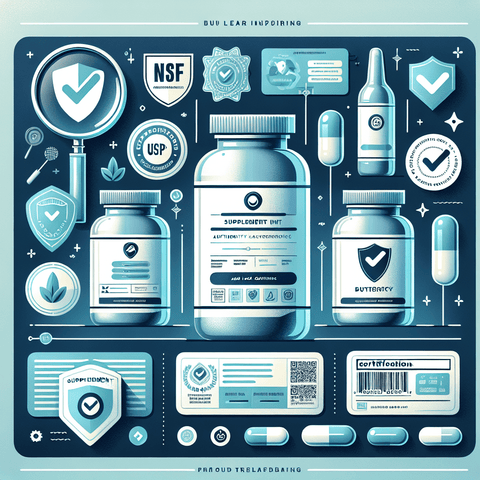
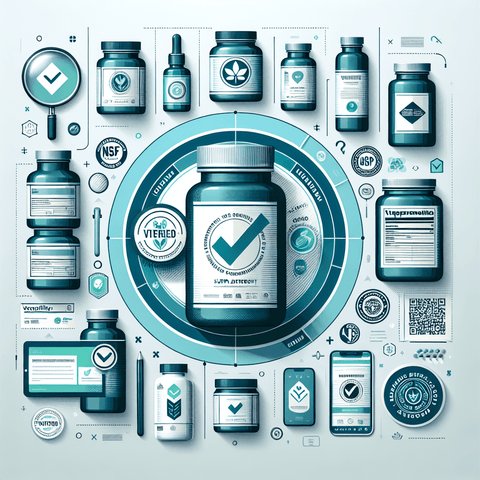
The supplement industry is regulated, but products are not all reviewed by the FDA before they hit the market. To fill this gap, many brands voluntarily submit their products for independent testing. This is where third-party seals become valuable. Organizations like NSF International, USP, and ConsumerLab.com provide independent verification that a product contains what it claims on the label and does not contain harmful levels of contaminants.

A seal from one of these organizations is a strong signal of quality and accountability. It indicates that a credible, outside authority has reviewed the manufacturing process and the final product, giving you an extra layer of confidence in your choice.