
{ "@context": "https://schema.org", "@type": "FAQPage", "mainEntity": [ { "@type": "Question", "name": "¿Qué significa descifrar las etiquetas de suplementos?", "acceptedAnswer": { "@type": "Answer", "text": "Descifrar las etiquetas de suplementos significa aprender a leer la información estructurada de un producto de vitaminas, minerales o plantas para saber exactamente qué está tomando, en qué cantidad y cómo usarlo correctamente. Debido a que las etiquetas siguen un formato consistente, unas pocas secciones clave revelan la mayor parte de lo que es importante." } }, { "@type": "Question", "name": "¿Cuáles son las secciones clave de una etiqueta de suplemento?", "acceptedAnswer": { "@type": "Answer", "text": "Las secciones clave de una etiqueta de suplemento son el tamaño de la porción y las instrucciones de uso, la lista de ingredientes, el % del valor diario o % VRN, otros ingredientes y las advertencias e instrucciones de conservación." } }, { "@type": "Question", "name": "¿Qué muestra el % del valor diario o % VRN en una etiqueta de suplemento?", "acceptedAnswer": { "@type": "Answer", "text": "El % del valor diario o % VRN indica cuánto de la ingesta diaria de referencia aporta una porción." } }, { "@type": "Question", "name": "¿Por qué importan los otros ingredientes en una etiqueta de suplemento?", "acceptedAnswer": { "@type": "Answer", "text": "La lista de otros ingredientes incluye excipientes, materiales de la cápsula, saborizantes o agentes antiaglomerantes. Estos son importantes si evita ciertos aditivos o alérgenos." } }, { "@type": "Question", "name": "¿Qué detalles de calidad y seguridad se deben comprobar en un suplemento?", "acceptedAnswer": { "@type": "Answer", "text": "Compruebe siempre la fecha de caducidad, el número de lote y los datos del fabricante, que ayudan a la trazabilidad si surgen preguntas. Las declaraciones en el envase están reguladas y suelen referirse a declaraciones de propiedades saludables de nutrientes aprobadas, como las evaluadas por la EFSA." } }, { "@type": "Question", "name": "¿Descifrar una etiqueta de suplemento reemplaza el consejo profesional?", "acceptedAnswer": { "@type": "Answer", "text": "No. Descifrar una etiqueta apoya decisiones informadas, pero no reemplaza el consejo profesional. Si toma medicamentos, está embarazada o tiene una condición de salud, consulte primero con un profesional de la salud antes de usar suplementos." } } ] }
Decodificación de la etiqueta de suplementos: Aprende a leer ingredientes, dosis y seguridad como un profesional
{"content":"
Leer e interpretar las etiquetas de los suplementos es la habilidad de convertir una etiqueta abarrotada de datos en información clara y utilizable: qué contiene realmente el producto, cuánto aporta de cada nutriente, en qué forma química, y si esa dosis se ajusta a un uso seguro y sensato. Este artículo explica cómo leer la tabla de nutrientes y la lista de ingredientes, qué significan realmente los valores porcentuales, por qué las unidades y las formas de los nutrientes influyen en la absorción, y qué advertencias e indicadores de calidad merecen una mirada más atenta. Ya compares multivitamínicos, minerales o productos de un solo ingrediente, estas habilidades te permiten evaluar cualquier etiqueta con objetividad antes de que el envase, el precio o las afirmaciones de marketing influyan en la decisión.
\n
Qué significa realmente leer las etiquetas de los suplementos
\n
Las etiquetas de los suplementos contienen dos tipos de información muy distintos. El primero está regulado por la ley: el contenido de nutrientes por porción, el tamaño de la porción, la lista completa de ingredientes, la declaración de alérgenos y el fabricante o distribuidor responsable. El segundo es el marketing: frases como «fórmula avanzada» o «alta potencia» que a menudo no tienen definición legal. Interpretar la etiqueta de un suplemento consiste, en gran medida, en separar ambos tipos de información: centrarse en los datos estandarizados que se pueden comparar y tratar el lenguaje promocional con un escepticismo saludable. En la Unión Europea, los suplementos se clasifican legalmente como alimentos, por lo que las etiquetas deben indicar cada vitamina y mineral añadido con su cantidad por porción; en Estados Unidos, la tabla de datos del suplemento (Supplement Facts) cumple la misma función.
\n
La etiqueta, sección por sección
\n
Tamaño de la porción y porciones por envase
\n
Todo lo que aparece en la etiqueta de un suplemento se expresa en relación con el tamaño de la porción indicado: las dosis, los valores porcentuales y, en la práctica, el precio por día. Un envase que parece asequible puede resultar considerablemente más caro cuando descubres que la porción recomendada son tres cápsulas tomadas dos veces al día. Es igual de importante comprobar si una porción equivale a la ingesta de un día. Si la etiqueta indica 500 mg de un nutriente por cápsula y la porción son cuatro cápsulas, el total diario asciende a 2.000 mg, una cifra que siempre conviene contrastar con los límites superiores seguros en lugar de darla por buena.
\n
Nutrientes, cantidades y valores porcentuales
\n
El corazón de la etiqueta es la tabla de nutrientes: cada vitamina y mineral, su cantidad por porción y un valor porcentual. En Estados Unidos se trata del % Valor Diario (VD, del inglés DV); en la UE, del % del Valor de Referencia de Nutrientes (VRN, del inglés NRV). Estos porcentajes describen la ingesta de referencia para un adulto sano promedio, no tu requerimiento personal, que varía según la edad, el sexo, la dieta, el embarazo y el estado de salud. De aquí se desprenden dos apuntes prácticos. Primero, el 100 % es un punto de referencia para evitar carencias, no un óptimo demostrado. Segundo, varios ingredientes relevantes —los ácidos grasos omega-3, los probióticos y la mayoría de los extractos vegetales— no tienen un valor de referencia establecido, de modo que la ausencia de un porcentaje no significa que un ingrediente carezca de importancia.
\n
La lista de ingredientes y los «otros ingredientes»
\n
Bajo la tabla de nutrientes se encuentra la lista completa de ingredientes, ordenada generalmente en peso decreciente: primero el componente más abundante. Aquí es donde encuentras la forma química de cada nutriente, el material de la cápsula o del comprimido y todo lo demás que contiene el producto. Términos como excipientes, antiaglomerantes y recubrimientos pueden sonar alarmantes, pero normalmente cumplen una función: evitan que los polvos se apelmacen y que los comprimidos se peguen a la maquinaria. Resultan realmente relevantes si tienes alergias o preferencias alimentarias: cápsulas de gelatina frente a cubiertas veganas, ingredientes derivados de la soja o alérgenos que deben declararse en la etiqueta. Leer esta sección lleva unos segundos y responde preguntas que el texto de marketing nunca responderá.
\n
Entender las dosis, las unidades y los límites superiores
\n
Las unidades son una fuente habitual de confusión. Los nutrientes aparecen en miligramos (mg), microgramos (mcg o µg) y, en ocasiones, en unidades internacionales (UI), una medida antigua de actividad biológica que todavía se usa para las vitaminas A, D y E. La distinción crítica está entre mg y mcg: un miligramo equivale a mil microgramos, de modo que confundir 100 mcg con 100 mg sobrestima la dosis mil veces. Las conversiones importan al comparar productos: 400 UI de vitamina D equivalen a 10 µg, y muchas etiquetas ya indican ambas cifras. Además, algunos minerales se declaran como compuestos completos y no como cantidad elemental, por lo que el peso indicado puede no coincidir con la cantidad de mineral activo que recibe tu cuerpo.
\n
Las dosis también tienen un techo de seguridad. Autoridades sanitarias como la Autoridad Europea de Seguridad Alimentaria (EFSA) y las Academias Nacionales de Estados Unidos publican los Niveles Superiores de Ingesta Tolerable (UL): la cantidad diaria máxima que se considera poco probable que cause daños con el tiempo. En adultos, el UL de la vitamina D es de 100 µg (4.000 UI) al día tanto en Europa como en Estados Unidos, mientras que el zinc y el selenio tienen límites superiores en el orden de las decenas bajas de miligramos y de unos pocos cientos de microgramos, respectivamente. La ingesta sostenida por encima de estos niveles es donde se acumula el riesgo, en particular con las vitaminas liposolubles y con minerales como el hierro, que el cuerpo no puede eliminar con facilidad.
\n
Por último, conviene distinguir los valores de referencia de las dosis utilizadas en investigación. El % VRN refleja la ingesta necesaria para prevenir carencias en la mayoría de los adultos sanos, mientras que los estudios sobre resultados de salud concretos a veces emplean cantidades diferentes. Una etiqueta que presume de aportar el 2.000 % del valor de referencia diario no es veinte veces mejor: para muchos nutrientes, la eficiencia de absorción disminuye a medida que la dosis sube, y el excedente de vitaminas hidrosolubles simplemente se elimina.
\n
Por qué importa la forma química de un nutriente
\n
Un mismo nutriente puede aparecer en forma de varios compuestos distintos, y la forma influye en la absorción, en el contenido elemental y en la tolerabilidad. El óxido de magnesio es económico, pero se absorbe comparativamente peor, mientras que el citrato de magnesio y el bisglicinato de magnesio se absorben con mayor eficiencia y suelen ser más suaves para la digestión. El carbonato de calcio contiene una proporción alta de calcio elemental, pero depende del ácido del estómago y conviene tomarlo con alimentos, mientras que el citrato de calcio depende menos del ácido. La vitamina D3 mantiene generalmente algo mejor los niveles en sangre que la vitamina D2, y el bisglicinato de hierro suele tolerarse mejor que el sulfato ferroso. Estas diferencias merecen revisarse, pero también lo merecen sus límites.
\n
Las diferencias entre formas suelen ser cuestión de grado más que de blanco o negro, y los estudios que las comparan directamente son limitados para muchas de ellas. La dosis total, la constancia en el uso y la tolerabilidad digestiva suelen importar más que perseguir una única forma «mejor». Antes de dar por hecho que el nombre de un compuesto familiar es automáticamente la mejor elección, ayuda consultar orientaciones específicas sobre cada ingrediente: por ejemplo, una visión general de las distintas formas de magnesio. Para el hierro, el zinc y el selenio, una guía detallada de suplementos minerales ofrece información más amplia.
\n
Afirmaciones de marketing y señales de alerta habituales
\n
Ciertas características de la etiqueta deberían hacerte frenar. Una mezcla propietaria agrupa varios ingredientes bajo un mismo nombre e indica solo un peso total, ocultando cuánto aporta el producto de cada componente, lo que hace imposible verificar si las dosis coinciden con las empleadas en la investigación. Este formato es habitual en las etiquetas de Estados Unidos, mientras que las normas de la UE suelen exigir cantidades para cada nutriente añadido. Los términos de calidad sin definición, como «grado farmacéutico» o «clínicamente probado», también merecen escrutinio, sobre todo cuando los estudios citados probaron dosis o formas distintas de las que entrega el producto. Combinar productos es otro riesgo oculto: un multivitamínico más un nutriente aislado en dosis alta pueden empujar discretamente la ingesta total por encima de niveles seguros, razón por la que conviene revisar los ingredientes y las pautas de uso de los multivitamínicos antes de combinar varios productos.
\n
Información de seguridad que merece leerse dos veces
\n
La sección de advertencias no es un texto legal de mero trámite; a menudo contiene la información más relevante para la seguridad de toda la etiqueta. Avisos estándar como «no superar la dosis recomendada» y «mantener fuera del alcance de los niños» importan especialmente en los productos que contienen hierro, una causa frecuente de intoxicación accidental en niños pequeños. Las etiquetas suelen aconsejar precaución durante el embarazo y la lactancia, y algunas interacciones son específicas: la vitamina K puede reducir el efecto de medicamentos anticoagulantes como la warfarina, motivo por el cual se aconseja a las personas que toman anticoagulantes mantener estable la ingesta de vitamina K y consultar al profesional que prescribe su medicación. Las declaraciones de alérgenos, las fechas de caducidad y las instrucciones de conservación completan el panorama de seguridad.
\n
Señales de calidad más allá de los nutrientes
\n
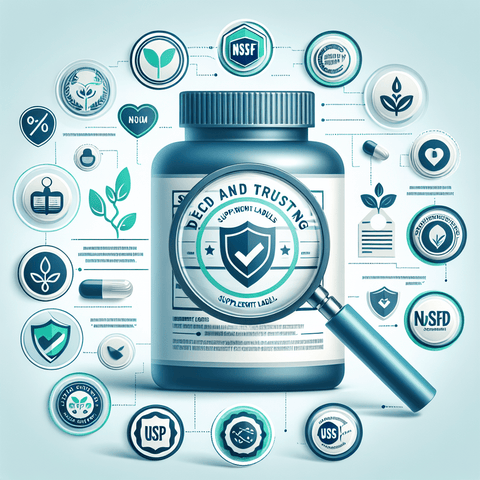
La etiqueta también puede revelar el rigor con el que un fabricante trata la calidad. Los sellos de análisis por terceros —como USP, NSF o Informed Sport— indican que un laboratorio independiente ha verificado la identidad de los ingredientes, la potencia y la ausencia de contaminantes especificados, como los metales pesados. La certificación de Buenas Prácticas de Fabricación (GMP), los números de lote y el nombre claro de la empresa responsable son otros tantos marcadores positivos. La ausencia de un sello no significa automáticamente mala calidad, pero una verificación independiente creíble aporta la seguridad de que lo que declara la etiqueta es lo que entrega la cápsula, algo que ninguna afirmación de marketing puede sustituir.
\n
Primero la alimentación: lo que una etiqueta no puede decirte
\n
Leer la etiqueta te dice qué contiene un producto, no qué necesita tu cuerpo. Para la mayoría de los adultos sanos, una dieta variada —verduras, frutas, cereales integrales, legumbres, pescado o fuentes alternativas de omega-3 y suficiente proteína— cubre la mayor parte de los requerimientos de nutrientes, y muchos países fortifican alimentos básicos como la harina, la sal o las bebidas vegetales. Las carencias se vuelven más plausibles con dietas restrictivas, una exposición limitada al sol —relevante para la ingesta y la seguridad de la vitamina D—, el embarazo, la edad avanzada, o condiciones médicas y medicamentos que dificultan la absorción. En estas situaciones, un análisis de sangre o una valoración profesional suelen ser mucho más informativos que adivinar a partir de los síntomas, y cualquier decisión sobre suplementos debería derivar de esa evaluación en lugar de sustituirla.
\n
Un esquema práctico para evaluar cualquier producto
\n
Una vez dominados los fundamentos, leer las etiquetas de los suplementos se convierte en una lista de comprobación repetible que puedes aplicar en cuestión de minutos:
\n
- Empieza por el tamaño de la porción. Comprueba cuántas cápsulas o cucharadas dosificadoras componen una porción diaria y cuánto cuesta al día.
- Revisa los nutrientes que realmente buscas. Anota la cantidad por porción y la forma química, no solo el nombre del nutriente.
- Lee los porcentajes con espíritu crítico. Utiliza el % VRN o el % VD para comparar, y considera los porcentajes muy altos como un motivo para consultar los niveles superiores de ingesta.
- Examina la lista completa de ingredientes. Busca alérgenos, cápsulas de gelatina frente a veganas e ingredientes añadidos que quizá no quieras.
- Lee todas las advertencias. El embarazo, el uso de medicamentos y las restricciones de edad afectan solo a algunos lectores, pero son críticos para ellos.
- Comprueba los marcadores de calidad. El análisis por terceros, los números de lote y un fabricante responsable identificado aportan credibilidad.
- Haz números entre productos. Suma los totales de todos los suplementos que tomas para evitar excesos no intencionados.
\n
Ideas clave
\n
- Las partes reguladas de la etiqueta de un suplemento son las cantidades de nutrientes, el tamaño de la porción, la lista de ingredientes y las declaraciones de alérgenos; la mayoría de las demás frases son marketing.
- Todas las dosis son por porción: comprueba las porciones por envase y si una porción equivale a la ingesta de un día.
- El % Valor Diario y el % VRN describen ingestas de referencia para adultos promedio, no requerimientos personales ni óptimos.
- Nunca confundas mg con mcg: los separa una diferencia de mil veces, y conversiones como 400 UI de vitamina D = 10 µg importan al comparar productos.
- La forma química de un nutriente, como el óxido de magnesio frente al bisglicinato, afecta a la absorción y la tolerabilidad, aunque las diferencias suelen ser modestas.
- Los Niveles Superiores de Ingesta Tolerable definen techos diarios a largo plazo; las vitaminas liposolubles y minerales como el hierro, el zinc y el selenio merecen especial atención.
- Las mezclas propietarias ocultan las dosis individuales de los ingredientes y dificultan una evaluación basada en la evidencia.
- Los sellos de análisis por terceros y los números de lote se encuentran entre las señales de calidad más fiables de una etiqueta.
- Las etiquetas muestran el contenido del producto, no la necesidad personal: la dieta, las pruebas y el consejo profesional deberían guiar la decisión de si un suplemento es realmente necesario.
\n
Preguntas frecuentes
\n
¿Cuál es la diferencia entre la tabla de nutrientes y la lista de ingredientes?
\n
La tabla de nutrientes enumera las vitaminas y minerales activos con sus cantidades por porción y sus valores porcentuales. La lista de ingredientes muestra cada componente en orden descendente por peso, incluida la forma química de cada nutriente, los materiales de la cápsula, los excipientes y los alérgenos. Necesitas ambas: la tabla te dice cuánto, mientras que la lista te dice en qué forma y qué más hay dentro.
\n
¿Qué significan realmente el % Valor Diario o el % VRN?
\n
Este porcentaje expresa la cantidad de un nutriente en una porción como porcentaje de la ingesta de referencia para un adulto sano promedio. Sirve como punto de referencia para comparar productos y evitar carencias, no como un objetivo personalizado. Las necesidades individuales pueden ser mayores o menores según la edad, el sexo, la dieta, el embarazo y el estado de salud.
\n
¿Por qué algunas etiquetas de suplementos usan UI en lugar de mg o µg?
\n
Las unidades internacionales (UI) miden actividad biológica en lugar de peso y son una unidad heredada que sigue empleándose para las vitaminas A, D y E. Muchas etiquetas añaden ya el equivalente en peso, como 10 µg (400 UI) para la vitamina D. Al comparar productos, convierte primero todas las cifras a la misma unidad, porque los valores en UI no pueden compararse directamente con los valores en miligramos.
\n
¿Qué es una mezcla propietaria y por qué es un problema?
\n
Una mezcla propietaria agrupa varios ingredientes bajo un mismo nombre e indica solo el peso total, sin precisar cuánto hay de cada ingrediente. Esto hace imposible comprobar si las dosis coinciden con las cantidades utilizadas en la investigación. Las etiquetas de la UE exigen generalmente cantidades para cada nutriente añadido, mientras que el formato de mezcla es habitual en los productos de Estados Unidos.
\n
¿Qué son los «otros ingredientes» de una etiqueta?
\n
Son componentes no nutritivos, como las cubiertas de las cápsulas, los excipientes, los antiaglomerantes, los recubrimientos y los aromas, que mantienen el producto estable y permiten su fabricación. La mayoría cumplen una función y se usan en cantidades muy pequeñas, pero importan si tienes alergias, intolerancias o preferencias como evitar la gelatina. Los alérgenos principales deben declararse en la etiqueta.
\n
¿Qué formas de nutrientes se absorben mejor?
\n
Depende del nutriente: el citrato y el bisglicinato de magnesio suelen absorberse mejor que el óxido, el citrato de calcio depende menos del ácido del estómago que el carbonato, y la vitamina D3 es algo más eficaz para elevar los niveles en sangre que la D2. Las diferencias suelen ser moderadas más que espectaculares, y la investigación que compara formas es limitada para muchos nutrientes. La tolerabilidad y la dosis total a menudo importan tanto como la forma en sí.
\n
¿Cómo puedo saber si un suplemento ha sido analizado por terceros?
\n
Busca un sello reconocido como USP, NSF o Informed Sport, o una declaración de que el producto ha sido verificado de forma independiente, idealmente con un certificado de análisis disponible a petición. Estos programas confirman que el producto contiene lo que declara la etiqueta y está libre de contaminantes especificados. La falta de un sello no prueba mala calidad, pero un sello creíble aporta una garantía independiente.
\n
¿Qué advertencias de la etiqueta debo tomar más en serio?
\n
Las advertencias sobre embarazo, lactancia, interacciones con medicamentos y restricciones de edad son las más significativas a nivel individual; por ejemplo, los productos con vitamina K aconsejan precaución a las personas que toman anticoagulantes como la warfarina. «No superar la dosis recomendada» y «mantener fuera del alcance de los niños» son especialmente importantes en los productos que contienen hierro. Si alguna advertencia te afecta, habla primero del producto con un profesional sanitario cualificado.
\n
¿Se puede tomar demasiada cantidad de una vitamina o un mineral?
\n
Sí, en particular con las vitaminas liposolubles A, D y E y con minerales como el hierro, el zinc y el selenio, que el cuerpo almacena o elimina lentamente. El riesgo proviene principalmente de una ingesta habitual por encima del Nivel Superior de Ingesta Tolerable, a menudo acumulada entre varios productos. Sumar los totales de todos los suplementos que tomas es la forma más sencilla de comprobarlo.
\n
¿Importa de verdad la fecha de caducidad?
\n
Sí. Los fabricantes garantizan las cantidades de nutrientes indicadas en la etiqueta solo hasta la fecha de caducidad, asumiendo una conservación adecuada, porque las vitaminas y otros compuestos pierden potencia de forma gradual. El calor, la luz y la humedad aceleran este proceso, razón por la que las instrucciones de conservación importan. Un producto consumido bastante tiempo después de la caducidad puede seguir siendo seguro, pero puede aportar menos que la dosis declarada.
\n
Palabras clave relacionadas
\n
- leer las etiquetas de los suplementos
- cómo leer la etiqueta de un suplemento
- tabla de datos del suplemento (Supplement Facts)
- significado del porcentaje de valor diario
- valor de referencia de nutrientes
- mezcla propietaria
- orden de la lista de ingredientes
- biodisponibilidad y formas de los nutrientes
- nivel superior de ingesta tolerable
- dosis del suplemento por porción
- suplementos analizados por terceros
- advertencias de seguridad de los suplementos
- ingredientes activos y otros ingredientes
- indicadores de calidad de los suplementos
- riesgos de las megadosis
"}