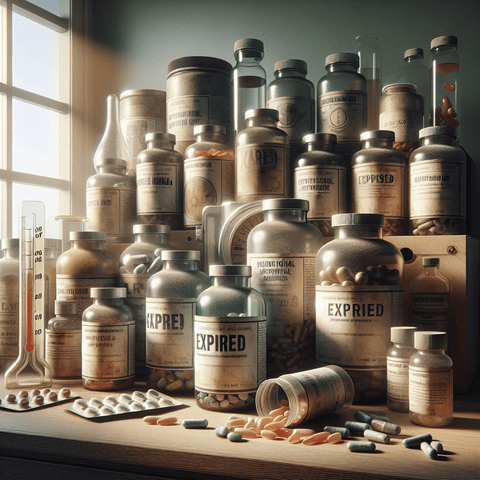
Supplementi scaduti: sono ancora sicuri da usare o dovresti buttarli?


Expired supplements come with questions about value, quality, and what to do next. Focusing on expired supplements helps separate perception from the label itself. In many cases the date on the package is a marker set by the manufacturer to indicate when the product is expected to maintain its labeled potency and quality under typical storage conditions. This page keeps the discussion centered on the concept of expiration dates and how they relate to the product you have on hand. Potency is a central consideration when thinking about expired supplements. Over time, the components inside can change in ways that aren’t uniform across products or types. Factors such as storage conditions, exposure to light, moisture, and temperature can influence how quickly stability shifts. Because of these variables, expired supplements may not retain the same characteristics they had when first produced, and the degree of change can differ between powders, capsules, liquids, and other formats. Rationale and risk are practical parts of evaluating expired supplements. The main concern is uncertainty about what is present in the product after the date, rather than a single predictable outcome. Packaging integrity and the overall condition of the container can also play a role in whether the product remains aligned with its original specification. When dealing with expired supplements, it can be helpful to consider the label guidance, any manufacturer notes, and the general principle that post-expiration performance is not guaranteed. When to discard is guided by a straightforward approach. Check the date printed on the container and follow the manufacturer’s guidance for expiration. If a product is past its stated date, it is common to replace it or obtain a fresh supply. For any questions or clarifications, refer to the packaging information or contact the manufacturer for details about a specific item. This keeps the discussion of expired supplements clear and focused on the timing, rather than making assumptions about effects or outcomes.


Do Expired Supplements Still Work or Are They Harmful? - Topvitamine
Aug 30, 2025
Gli integratori scaduti non diventano necessariamente tossici, ma dopo la data indicata il produttore non garantisce più stabilità, sicurezza ed efficacia. Non esiste un periodo universale di utilizzo oltre la scadenza: contano formulazione, confezione e conservazione. Questa guida spiega come comportarsi con vitamine, minerali, liquidi, probiotici e omega-3, quali segnali osservare e quando è preferibile smaltire il prodotto.

Expired supplements are a common source of questions for anyone managing a home supply of vitamins, minerals, and other nutritional products. When a bottle passes its expiration date, it’s natural to wonder whether the contents are still effective or whether they should be thrown away. This guide provides a broad overview of what expiration dates mean, why potency can change, and the key factors to consider when deciding what to do with a product that is past its labeled date.

What Does an Expiration Date on a Supplement Mean?

An expiration date on a supplement label is a statement from the manufacturer. It indicates the time frame during which the product is expected to retain its labeled potency and quality, provided it has been stored under the recommended conditions. This date is not necessarily a safety deadline but rather a promise of content and performance. The manufacturer sets this date based on stability testing and data, aiming to give consumers a clear idea of how long the product will remain at its listed strength.

It’s also worth noting that different types of supplements have different levels of stability. What holds true for a simple vitamin tablet may not apply to a liquid, a softgel, or a powdered formula. The physical form, the specific ingredients, and the manufacturing process all play a role in how quickly a product might degrade.

Why Potency and Quality Can Change Over Time

The central issue with expired supplements is uncertainty about their contents. Over time, the active ingredients in a supplement can break down, and the speed of this process is not uniform across all products. Several factors influence the stability of a supplement, including:

  • Storage conditions: The environment where the supplement is kept matters. High heat, humidity, and direct sunlight can accelerate the breakdown of ingredients.
  • Exposure to air and moisture: Repeatedly opening the container exposes the contents to air and moisture, which can affect their stability.
  • Product format: Liquids and powders may be more prone to degradation than tightly compressed tablets or capsules in some cases.
  • Packaging integrity: A damaged or compromised container can no longer protect the contents as intended.

Because of these variables, an expired supplement may not deliver the same amount of each nutrient as it did when it was fresh. The concern is less about a single predictable outcome and more about the lack of certainty regarding the product’s composition after its expiration date.

Safety Considerations and General Guidance

Generally speaking, the main risk associated with expired supplements is not toxic byproducts but the likelihood of reduced potency. However, the lack of a guarantee that a product will work as intended is, for many people, reason enough to replace it. It is always important to assess the physical condition of the product. If there are signs of discoloration, a change in smell, or a change in texture, this could indicate that the product has degraded.

When you are evaluating an older supplement, consider the label guidance, any manufacturer notes, and the general principle that performance after the expiration date is not guaranteed. If you have any questions, the packaging or the manufacturer is the most reliable source for information about a specific product.

When to Discard Expired Supplements

A straightforward approach is best. Check the date on the container and stick to the manufacturer’s recommendation. If the product has passed its expiration date, the clearest and simplest decision is to discard it and obtain a fresh supply. This is the most effective way to ensure you are taking a product as it was intended to be consumed.

For those interested in learning about specific nutrients and how to maintain a consistent supplement routine, exploring our general supplement collections can be a good starting point. You can browse our natural supplement collection or review a specific category like multivitamins for more detailed information on ingredients and usage.

Practical Considerations for Your Supplement Routine

There are a few practical steps you can take to manage your supplements and minimize waste:

  • Check the expiration date before you buy, and choose products with a date that gives you plenty of time to use them.
  • Store your supplements as recommended on the label, typically in a cool, dry place, to help maintain their quality.
  • Keep an eye on your inventory and make a habit of using older products first before opening new ones.
  • If you regularly discard expired products, consider buying smaller quantities to better match your usage rate.

Adopting these habits can help ensure that the supplements you take are as effective as possible and can also reduce the amount of product that gets thrown away. For more information on specific supplement categories, exploring a relevant healthy origins supplement collection can offer greater insight into product quality, origin, and sourcing.

The Bottom Line on Expired Supplements

The clearest conclusion is that the expiration date is a guide to a product’s expected quality and potency. When in doubt, the safest and most practical choice is to discard expired supplements and replace them with a fresh supply. This aligns your use of the product with the manufacturer’s assurance of quality.

This tag page offers a broad overview. For deeper insights into a specific nutrient or supplement type, you can navigate to the relevant category pages within our store. For example, you may be interested in learning more about magnesium supplements and their role in the body or other specific vitamins and minerals. These resources are designed to help you make informed decisions about your supplementation routine.