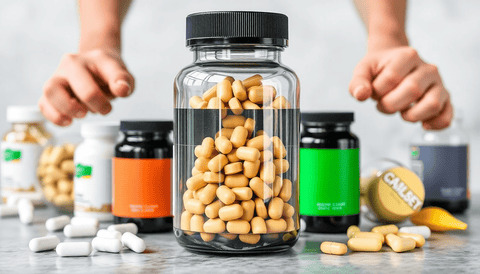
Integratori sportivi naturali: potenzia le prestazioni massime con il potere a base di piante


Gli integratori sportivi naturali offrono opzioni a base vegetale pensate per gli atleti che cercano prodotti sostenuti dalla scienza e orientati alle piante. Questa pagina si concentra sulla scienza alla base di queste scelte e descrive le principali categorie, con un chiaro accento sugli integratori sportivi naturali come quadro di riferimento per valutazione e selezione. La scienza dietro gli integratori sportivi naturali copre come i bioattivi derivati dalle piante interagiscono con la fisiologia, inclusi i percorsi di segnalazione, la modulazione metabolica e l'interazione dei composti studiata dai ricercatori in contesti controllati. Le evidenze provengono da diversi tipi di studi—esperimenti di laboratorio, studi clinici e revisioni sistematiche—che evidenziano come formulazione, dosaggio e biodisponibilità influenzino i risultati. Concentrandosi sui meccanismi piuttosto che su affermazioni generiche, si può apprezzare come i diversi ingredienti si inseriscano in un contesto più ampio di allenamento e recupero, senza fare affermazioni prescriptive. Le opzioni naturali più comuni includono nitrati derivati dalla barbabietola, provenienti da fonti vegetali come la barbabietola e prodotti correlati, così come estratti di ciliegia tartarica o melograno ricchi di polifenoli. Altre vie vegetali comprendono estratti di tè verde e fonti di caffeina, studiati per le loro proprietà stimolanti, così come adattogeni come l'ashwagandha o la rhodiola e miscele di curcuma/turmerico ricche di polifenoli. Ogni categoria presenta caratteristiche fitochimiche distinte e considerazioni sulla modalità di consegna, rendendo importante comprendere la scienza dietro la produzione e la preparazione di questi ingredienti prima di fare una scelta. Quando si valutano gli integratori sportivi naturali, si deve dare priorità alla qualità del prodotto, alla chiarezza dell'etichetta e alla verifica da parte di terzi. Cercare certificazioni come USP o NSF Certified for Sport, provenienza trasparente e liste di ingredienti chiare, che riducono il rischio di sostanze bandite o contaminanti. Esplorando ora la scienza e le principali opzioni, si può costruire un approccio ponderato e a base vegetale agli integratori sportivi naturali, allineato ai propri obiettivi di allenamento e ai propri valori.


Top 10 Supplements for Athletes and Active Lifestyles | Topvitamine - Topvitamine
Aug 26, 2025
Gli integratori per energia e sport non sostituiscono alimentazione, idratazione, sonno e recupero. Questa guida presenta dieci categorie utili per chi si allena, tra cui creatina, caffeina, proteine, elettroliti, magnesio e vitamine. Spiega quali sostanze possono sostenere prestazione e recupero, quali evidenze considerare, come valutare un prodotto e quando chiedere consiglio a un professionista sanitario.
Top Supplements for Athletes and Active Lifestyles | Natural Sports Supplements - Topvitamine
Jul 06, 2025
Gli integratori sportivi possono completare, ma non sostituire, un’alimentazione adeguata, il sonno e un programma di allenamento ben strutturato. Questa guida illustra il possibile ruolo di proteine, creatina, caffeina, vitamine, minerali, probiotici ed elettroliti, con criteri pratici per scegliere un prodotto. Troverai anche risposte su idratazione, recupero nei giorni di riposo, indolenzimento muscolare e principali precauzioni d’uso.

Welcome to our comprehensive guide on natural sports supplements. This resource is designed to help athletes and fitness enthusiasts understand the broad landscape of plant-based and naturally-derived products that are studied for their potential to support performance, recovery, and overall training goals. From endurance and energy to recovery and stress management, we will explore the main categories, key ingredients, and important quality considerations to help you build a thoughtful approach to natural supplementation.

What Are Natural Sports Supplements?

Natural sports supplements are products formulated with ingredients sourced from natural origins, primarily plants, botanicals, and other naturally occurring compounds. They are distinct from synthetic supplements, emphasizing the use of whole-food extracts and phytochemicals. These products are intended to complement, not replace, a well-rounded diet and training program. The scientific study of these supplements examines how plant bioactives, such as polyphenols, adaptogens, and nitrates, interact with physiological pathways, potentially influencing metabolism, signaling, and recovery. The evidence base is diverse, ranging from laboratory experiments to controlled clinical trials, highlighting how formulation, dosing, and bioavailabaility are critical factors in their potential effectiveness.

By focusing on mechanisms and context rather than broad, prescriptive assertions, we can better appreciate how these different ingredients fit into a broader training and recovery strategy. For example, a compound's source, extraction method, and concentration can significantly influence how it is studied and used. It is also crucial to understand that "natural" does not inherently imply safety or effectiveness, and all supplements should be evaluated critically, just like any other product.

Main Types of Natural Sports Supplements

The natural sports supplement market can be broadly organized into functional categories based on their primary research focus. Understanding what these categories aim to support is the first step in determining what might be relevant for you. These are not rigid classifications, and some ingredients may have properties that cross several categories.

  • Endurance Support: Ingredients such as beetroot powder or juice concentrate are studied for their nitrate content, which may have a significant role in circulatory health and exercise efficiency. These are among the most popular natural sports supplements for athletes focusing on aerobic performance.
  • Recovery and Antioxidant Support: Polyphenol-rich extracts from tart cherry, pomegranate, and turmeric (curcumin) are frequently studied for their potential to modulate oxidative stress and support muscle recovery after exercise.
  • Energy and Focus: Natural sources of caffine, such as green tea extract, guarana, and yerba mate, are used to support alertness and perceived exertion. Other compounds like adaptogens are studied for helping the body maintain balance during periods of physical and mental stress.
  • Stress Management (Adapatogens): Adaptogens such as ashwagandha and rhodiola are a separate class of botanicals traditionally used to help the body adapt to various stressors. They are investigated for their potential role in supporting hormonal balance and may help with the recovery phase from intense training.
  • Ingredient-Specific: Beyond these categories, there is a wide variety of ingredients like amino acids (e.g., BCAAs) and mineral complexes. For a deep dive into a specific amino acid supplement, you might explore our comprehensive guide on amino acids supplements.

What is the Science Behind These Natural Sports Supplements?

The science of natural sports supplements is a constantly evolving field. The research often focuses on specific bioactives and their mechanisms of action. For instance, beetroot's potential benefits are linked to dietary nitrate, which the body can convert to nitirc oxide, a molecule involved in vasodialtion. This mechanism is studied for its effects on blood flow and oxygen utilization during exercise.

Similarly, the potential recovery benefits of tart cherry are often attributed to its high concentration of polyhenols and anthocyans, which have antioxidant and anti-inflammatory properties in laboratory models. Adapatogens like ashwagandha have been studied for their effects on cortisol levels, a key hormone in stress response. Turmeric's active compound, curcumin, is another extensively studied polyhenol for its anti-inflammatory properties. Research on these compounds is often preliminary or conducted in specific populations, so it's important to view the evidence with a balanced perspective.

Quality, Safety, and Evaluation: Key Considerations

Choosing a high-quality natural sports supplement is a critical step. Since the supplement industry is vast and variable, a careful approach to evaluation is vital. Here are some key factors to prioritize:

  • Third-Party Verification: Look for certifications from independent organizations such as NSF Certified for Sport or USP. This ensures the product has undergone testing for identity, purity, and potency, and has been screened for prohibited substances.
  • Label Clarity: Read ingredient labels carefully. Look for specific ingredient names and concentrations (measured in milligrams) rather than proprietary blends that mask exact quantities. Tansparent sourcing and clear supply chain information are also positive signs.
  • Sourcing and Manufactring: Reputable brands often provide details about where ingredients are sourced and how they are manufactured. Good Manufacturing Practices (cGMP) compliance is a standard for quality.
  • Scientific Evidence: Evaluate the quality and quantity of scientific research behind the ingredient. Has it been studied in humans, in athletes, and with a relevant dosage? Peer-reviewed studies are more compelling than testimonials.
  • Safety and Interaction: Consider your own health profile and any medications you might be taking. Even natural ingredients can have effects and interactions. When in doubt, a healthcare professional can offer personalized guidance. For general health supplements, see our guide on natural supplement basics.

How to Integrate Them Into Your Routine

Supplementation is just one piece of a much larger performance puzzle. For most individuals, the primary pillars of athletic performance are a nutritious diet, consistent training, and adequate sleep. Natural sports supplements are designed to support, not replace, these foundational elements. They can be used strategically to address specific goals, such as enhancing pre-workout energy or supporting faster recovery, but they are not a magic solution.

Before starting any new supplement, including natural ones, it is wise to assess your own dietary intake and training demands. For example, an endurance athlete might consider beetroot juice before a long run, while a strength or high-intensity athlete might find a creatine monohydrate or a tart cherry supplement for recovery more relevant. The best approach is always an informed, individualized one. You can always expand your knowledge by exploring related topics, like the specific health benefits from our curcumin and turmeric supplements to understand how these ingredients can play a role in a broader wellness routine.

Exploring the Topic Further

This guide is intended as an overview to help you navigate the world of natural sports supplements. The broad categories we've covered provide a helpful framework, but each one contains its own depth and scientific history. We've also assembled a helpful for those more curious about the wider supplement landscape.

For further exploration, you might consider the following questions: What are the best natural supplements for athletes? Is there a most powerful natural supplement? What are the differences between natural and synthetic options? These are great questions for deeper dives, and they point toward the importance of choosing the right tool for the right job.

Remember that the most effective approach is a holistic one. Combining a high-quality diet, a well-structured training plan, and a thoughtful supplementation strategy is the most sustainable path toward achieving your performance goals.