
Scopri le vitamine di qualità farmaceutica: pure, potenti e affidabili. Questa linea indica uno standard superiore rispetto ai semplici integratori, puntando su purezza, potenza costante e fonti affidabili. La nostra selezione si concentra su vitamine di qualità farmaceutica, testate in laboratorio e supportate dai farmacisti per il benessere quotidiano. Troverai dettagli chiari sui prodotti e impegni di qualità che ti permettono di fare acquisti con sicurezza. Ogni lotto viene testato in laboratorio per verificare potenza e purezza, con screening di contaminanti effettuati da laboratori indipendenti. Forniamo Certificati di Analisi (COA) per trasparenza, così puoi consultare i risultati dei test prima dell’acquisto. I nostri farmacisti ti assistono chiarificando le scelte di formulazione e rispondendo alle tue domande sugli ingredienti delle vitamine di qualità farmaceutica. Questa combinazione di validazione in laboratorio e guida professionale rafforza la fiducia in ogni acquisto. La qualità inizia dalla selezione delle materie prime e dalla formulazione. Prioritizziamo ingredienti di grado farmaceutico, una produzione conforme alle norme GMP rigorose e una severa verifica dei fornitori. Tutti i prodotti sono sottoposti a controlli allergenici e a un tracciamento completo, dalla materia prima al prodotto finito. Il confezionamento è studiato per preservare la potenza e offrire etichette chiare per le vitamine di qualità farmaceutica, inclusi ingredienti e indicazioni di conservazione. Acquista con attenzione al benessere quotidiano e a un servizio affidabile. Le nostre vitamine di qualità farmaceutica sono accompagnate da informazioni semplici sui prodotti, COA trasparenti e supporto dai farmacisti per aiutarti a confrontare le opzioni. Goditi un’esperienza di acquisto senza interruzioni, con un servizio clienti reattivo, resi facili e un’educazione continua sulla qualità dei prodotti. Scegli vitamine di qualità farmaceutica per una base affidabile e costante nel tuo regime di integratori.
Vitamine di grado farmaceutico: integratori puri, potenti e affidabili
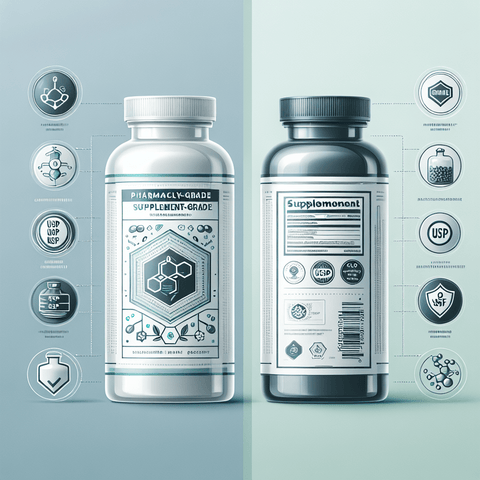
Pharmacy-grade vitamins are usually understood as supplements made with a strong emphasis on purity, potency and verified sourcing. The term is not a legal drug classification, and it does not mean a supplement works like a medicine. Instead, it points to quality expectations such as pharmaceutical-grade ingredients, GMP-compliant manufacturing, contaminant screening and batch documentation. For readers comparing supplement options, these details can make the difference between a vague label and a product story that can be checked.
This tag page is a broad starting point for that topic. It explains what pharmacy-grade quality typically involves, why testing and transparency matter, how pharmacy-grade and standard supplements may differ, and which nutrient or supplement categories are worth exploring next. More specific questions, such as individual dosage, condition-specific use or product-by-product comparisons, are better suited to dedicated articles linked from this hub.
What Pharmacy-Grade Vitamins Typically Means
There is no single universal definition of pharmacy-grade vitamins that applies identically across every market. In practice, the phrase usually describes a quality standard rather than a therapeutic category. It suggests that a manufacturer has taken extra steps to verify ingredients, control production and document testing. These steps are intended to support consistency and transparency, not to imply that a supplement can replace medical treatment.
Key quality signals often associated with pharmacy-grade positioning include:
- Pharmaceutical-grade or carefully vetted raw materials
- GMP-compliant manufacturing environments and processes
- Third-party or independent laboratory testing
- Contaminant screening, including heavy metals and microbial checks where applicable
- Certificates of Analysis (COAs) or similar batch documentation
- Allergen controls and traceability from raw material to finished goods
These signals do not guarantee a specific health outcome. They help answer a different question: whether the product has been made and documented in a way that supports confidence in its identity, potency and purity.
Why Testing, Potency and Bioavailability Are Central Topics
When readers search for pharmacy-grade supplements that actually work like medicine, they often mean they want products that are reliable, well documented and formulated with attention to how ingredients are absorbed and used by the body. That is a reasonable quality question, but it should not be confused with a medical efficacy claim. Supplements are not medicines, and no supplement should be presented as a treatment or cure.
Three concepts are especially useful for understanding quality at a broad level:
- Potency: whether the amount of an ingredient in the finished product matches what the label states.
- Purity: whether unwanted substances, contaminants or undeclared ingredients are controlled or absent within acceptable limits.
- Bioavailability: how a nutrient or compound is absorbed and made available to the body. This can vary by form, formulation and individual factors.
These topics are important because they shape how supplement quality is discussed in a clinical or pharmacist-reviewed context. They also explain why some labels provide more detail than others, and why third-party testing and clear formulation information can be useful when comparing products.
Pharmacy-Grade vs. Standard Supplements: A High-Level Comparison
Not every supplement marketed as high quality follows the same standards. A broad comparison can help readers understand what may differ between pharmacy-grade positioning and ordinary supplement ranges. The table below is a general guide, not a guarantee that every product in either category will match every point.
- Sourcing: pharmacy-grade positioning often involves stricter supplier vetting and documented raw material identity.
- Manufacturing: GMP-compliant production and controlled processes are commonly emphasised.
- Testing: independent laboratory testing and contaminant screening may be more clearly documented.
- Transparency: COAs and batch-level documentation may be available for review.
- Label clarity: ingredient forms, allergen controls and storage directions may be presented in more detail.
- Support: pharmacist-backed guidance may be available to help clarify formulation choices and general usage questions.
Standard supplements can still be appropriate for many people, and quality varies across the entire market. The useful question is not simply which category sounds better, but which product provides enough transparency for an informed decision.
Major Nutrient and Supplement Categories to Explore
Pharmacy-grade quality can apply across many types of supplements. Understanding the broader categories helps readers navigate the topic without treating any single product as a universal solution. Common areas include:
- Fat-soluble vitamins such as vitamins A, D, E and K
- Water-soluble vitamins such as B-complex vitamins and vitamin C
- Minerals such as magnesium, calcium, iron, zinc, selenium and trace minerals
- Multivitamins and broad-spectrum formulas
- Omega-3 fatty acids, including DHA and EPA
- Probiotics and prebiotics
- Herbal and botanical supplements, such as turmeric, curcumin and ashwagandha
- Amino acids and sports supplements
- Antioxidant-focused formulas and superfoods
Each category has its own formulation considerations. For example, some nutrients are better understood in the context of dietary intake, while others are commonly discussed in relation to specific life stages or needs. A broad guide like this one can introduce those dimensions, but individual articles are better placed to explore them in depth.
You can explore related product categories such as natural supplements or mineral supplements to see how quality considerations apply across different nutrient groups.
How to Read Quality Signals When Comparing Products
Labels and product pages can contain a great deal of information. A practical approach is to focus on the details that support verification and informed comparison rather than relying on claims alone.
- Check the ingredient list and the exact form of each nutrient or compound.
- Look for clear potency information that matches the label.
- See whether third-party testing or Certificates of Analysis are mentioned.
- Review allergen statements and storage directions where relevant.
- Consider whether pharmacist-backed support or educational content is available to clarify questions.
- Remember that general information is not personalised medical advice, and individual needs can vary.
These steps do not replace professional guidance, but they can make product comparisons more structured. They also help readers identify which questions to ask a healthcare professional if they are considering a supplement for a specific concern.
Safety, Context and Responsible Supplement Use
Quality is only one part of the picture. Even well-made supplements can be unnecessary or inappropriate for some people. Dietary intake, existing health conditions, medications, pregnancy, breastfeeding and individual nutritional status can all influence whether a supplement is suitable. This page does not provide personalised medical advice and should not be used to self-diagnose or self-treat.
A responsible approach is to treat pharmacy-grade vitamins as one factor in a broader decision. Quality documentation, transparent labelling and pharmacist-backed guidance can support that decision, but they do not replace advice from a qualified healthcare professional. Where a specific health concern exists, individual guidance is more appropriate than a general supplement guide.
Exploring the Topic Further
This tag page is intended to provide a useful map of the pharmacy-grade vitamins topic. The articles associated with this tag can go deeper into individual nutrients, forms, comparisons and practical questions. If you want to explore broader supplement categories alongside this topic, you can also browse multivitamins and related guides to see how quality considerations apply across different product types.
For readers new to the topic, the key takeaway is that pharmacy-grade positioning is primarily about quality systems, testing and transparency. It is not a promise of medical effect. Understanding those distinctions helps make supplement comparisons more grounded and supports more informed conversations with healthcare professionals.